
Menopause
What to Eat to Balance Your Hormones in Summit, NJ
June 16, 2026 · Julia Erickson
What to Eat to Balance Your Hormones in Summit, NJ
If you've been chasing answers to fatigue, PMS, stubborn weight, or restless sleep, the solution might be simpler than any supplement: it's what's on your plate, three times a day.
The foods to eat to balance hormones are not exotic or expensive. They are the building blocks your body uses to produce progesterone, regulate estrogen, keep cortisol steady, and give your thyroid what it needs. This post is a meal-by-meal guide (breakfast through dinner, with snacks and drinks) so you can see exactly what hormone-balancing eating looks like in practice. For Jolie's clients in Summit, that means real food you can find at your local farmers market or a careful grocery run.
What Makes a Meal Hormone-Balancing?
Before we get into specific foods, it helps to understand what a meal does to your hormones.
Every time you eat, you trigger an insulin response. A breakfast built around refined carbs spikes blood sugar fast, triggers a surge of insulin, and leaves you crashing an hour later. That crash signals stress to your adrenals, which release cortisol.
Elevated cortisol suppresses progesterone and disrupts thyroid signaling. One poorly constructed breakfast sets off a domino effect that can affect your mood, energy, and cycle for hours.
A hormone-balancing meal, by contrast, combines three things: quality protein, healthy fat, and fiber. That trio slows glucose absorption, keeps insulin steady, provides the raw material for hormone production (cholesterol from healthy fats is literally the precursor to progesterone and estrogen), and feeds the gut bacteria that regulate estrogen clearance through what researchers call the estrobolome.
Understanding the stress response, specifically how cortisol rises in response to blood sugar swings and perceived stress, is one of the most useful pieces of physiology a woman can have. It reframes food choices from willpower to biology.
Breakfast That Balances Hormones
Morning is when cortisol is naturally at its peak. The goal of breakfast is to work with that cortisol curve, not spike it further.
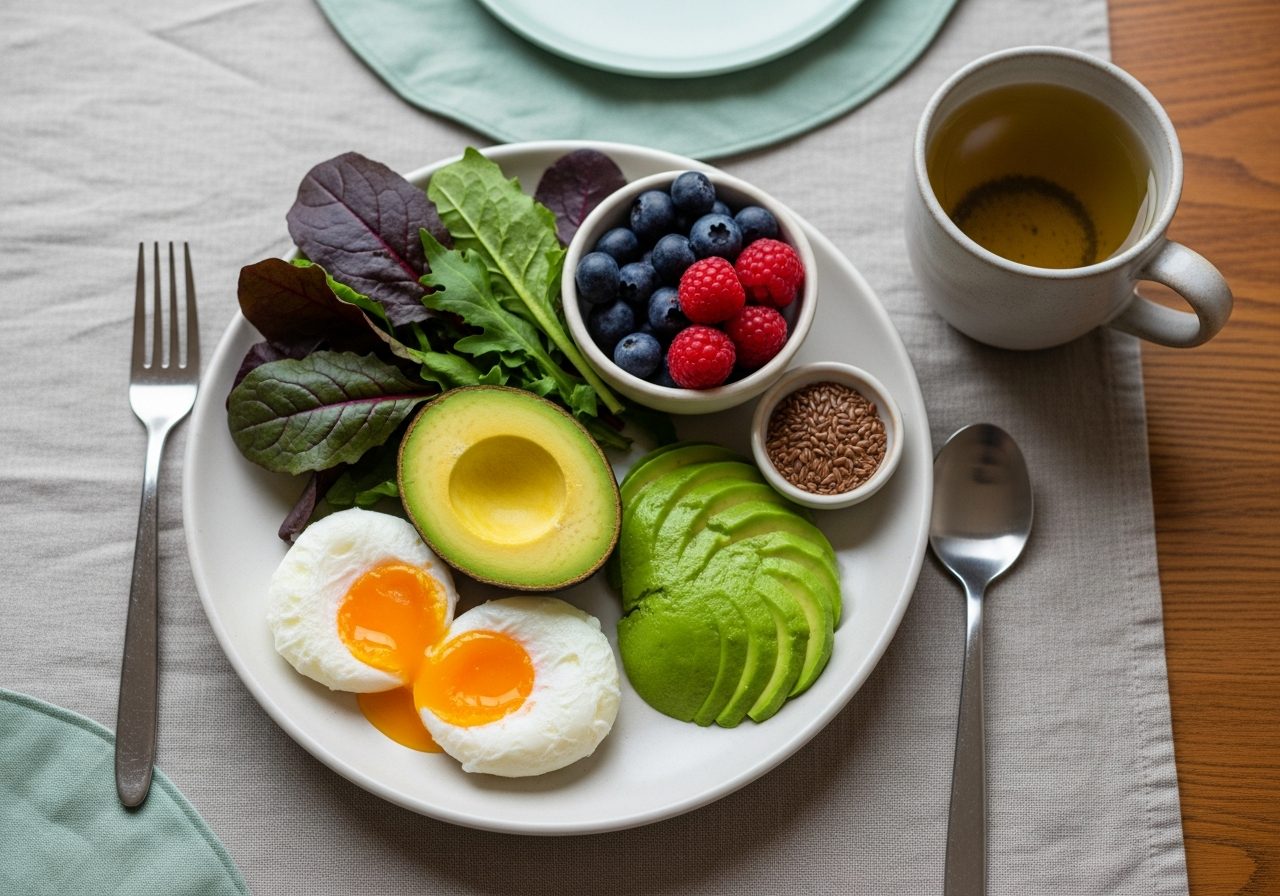
Eggs, Greens, and Avocado
This is the closest thing to a hormone-balancing default setting. Eggs provide complete protein plus choline (essential for liver function and estrogen metabolism) and fat-soluble vitamins. A handful of sautéed spinach or arugula adds folate, iron, and magnesium. Half an avocado brings monounsaturated fat, fiber, and potassium.
Together, this plate keeps blood sugar flat from breakfast well into mid-morning, which means cortisol stays calm and progesterone production is not undermined.
Greek Yogurt, Berries, and Ground Flaxseed
If you prefer something lighter, this combination works beautifully. Full-fat Greek yogurt gives you protein and probiotics for gut health, which feeds directly into estrogen regulation. A cup of blueberries or raspberries adds polyphenols that support liver detox pathways. A tablespoon of freshly ground flaxseed brings lignans, plant compounds that gently modulate estrogen.
This bowl takes five minutes and supports your hormones from multiple angles at once.
Salmon, Leafy Greens, and Sweet Potato
If you're open to savory breakfasts (many of my clients in Summit become converts), wild salmon is exceptional. The omega-3 fatty acids in salmon reduce systemic inflammation that drives hormonal disruption, and salmon is also one of the richest food sources of iodine and vitamin D, both of which the thyroid depends on. Pair it with a bed of greens and a small sweet potato for sustained energy and beta-carotene, which the body converts to vitamin A for progesterone support.
Lunch That Balances Hormones
By midday, cortisol is declining. Lunch needs to carry you through the afternoon without a blood sugar crash that triggers a second cortisol spike around 3 p.m.
Big Salad with Protein and Healthy Fat
A large salad built on cruciferous and leafy greens (arugula, kale, shredded cabbage, broccoli sprouts) is one of the most powerful hormone meals you can eat. Cruciferous vegetables contain indole-3-carbinol and DIM (diindolylmethane), compounds that actively support the liver's ability to clear excess estrogen.
Add your protein of choice: grilled chicken, a hard-boiled egg, sardines, or a scoop of lentils. Dress it with olive oil and lemon. That combination of fat, protein, and fiber from cruciferous vegetables creates the stable insulin environment your afternoon energy depends on.
Lentil and Roasted Vegetable Bowl
Plant-based lunches can be deeply hormone-supportive when built around legumes. Lentils are rich in fiber, magnesium, and plant protein. Roast a sheet pan of whatever is in season (bell peppers, zucchini, beets, sweet potato) and layer it over lentils with a tahini drizzle.
Magnesium is worth highlighting here. It is involved in hundreds of enzymatic reactions including progesterone synthesis, blood sugar regulation, and cortisol modulation. Many women are depleted in magnesium without realizing it, and lunch is a practical place to build it in.
Warming Soup with Protein
In cooler months, a broth-based soup with a protein side anchors the afternoon beautifully. Bone broth alone brings glycine, minerals, and gut-healing collagen. Add shredded chicken or chickpeas, leafy greens, and a slice of sourdough bread for resistant starch that feeds gut microbiota.
Dinner That Balances Hormones
Dinner sets the tone for overnight repair. The liver does much of its hormone-clearing work while you sleep, so what you eat at dinner either supports or burdens that process.
Fish or Poultry with Cruciferous Vegetables and a Whole Grain
This is the dinner template I return to most often with clients. A portion of salmon, cod, or chicken alongside a generous serving of roasted broccoli, cauliflower, or Brussels sprouts, and a half cup of quinoa, brown rice, or farro.
The fish provides omega-3s and amino acids. The cruciferous vegetables support estrogen metabolism. The whole grain gives you serotonin precursors (tryptophan converted to serotonin in the gut) that support the melatonin your body will need for sleep. Building your plate this way, as outlined in foundational guides like the Healthy Eating Plate, ensures that every macronutrient group is doing hormonal work.
Plant-Based Stir-Fry with Tofu or Tempeh
Fermented soy in the form of tempeh is a rich source of phytoestrogens, plant compounds that bind weakly to estrogen receptors and help moderate estrogen fluctuations. This is particularly useful during perimenopause. Stir-fry tempeh or firm tofu with a rainbow of vegetables (bok choy, snap peas, shredded carrots, shiitake mushrooms, and ginger) over brown rice.
This plate is high in B vitamins (critical for liver detox and mood regulation), zinc (essential for progesterone synthesis), and fiber that keeps the estrobolome working efficiently overnight.
Snacks That Support Hormone Balance
Snacking is optional for many women. If you've built your meals well, you may not need much between them. When you do snack, the same rule applies: protein plus fat plus fiber. Avoid grazing on carbohydrates alone, which triggers repeated insulin spikes without the buffer to smooth them out.
Snacks that work:
- Apple with almond butter (fiber + healthy fat + a touch of natural sugar)
- Hummus with cucumber and a few olives (protein + fiber + fat)
- Hard-boiled egg with a small handful of pumpkin seeds (complete protein + zinc for progesterone)
- A square of dark chocolate (70% or higher) with walnuts (magnesium + omega-3s + antioxidants)
- A small bowl of full-fat cottage cheese with flaxseed and blueberries
None of these require preparation beyond a few minutes. They all keep blood sugar stable between meals.
Drinks for Hormone Balance
What you drink is often the overlooked piece of the hormone puzzle.
Water is the foundation. Dehydration concentrates hormones in the bloodstream and stresses the kidneys. Aim for half your body weight in ounces per day.
Herbal teas are underused hormone allies. Spearmint tea has been shown in clinical settings to reduce androgen levels, which is helpful for women with PCOS or excess facial hair. Raspberry leaf tea is traditionally used for uterine tone and menstrual regularity. Rooibos and peppermint both provide antioxidants without caffeine that could disrupt sleep or cortisol rhythm.
Green tea is a smart choice in the morning: the moderate caffeine paired with L-theanine gives a sustained, non-jittery lift that does not spike cortisol the way coffee often does for sensitive individuals.
Bone broth, especially in the evening, supports the gut lining and provides glycine that helps calm the nervous system and supports deep sleep.
What to Minimize
Balancing hormones through food is as much about reducing the disruptors as it is about adding the right things.
Refined sugar drives insulin spikes that suppress sex hormone production and feed inflammatory pathways. Ultra-processed carbohydrates do the same.
Excessive caffeine (more than one or two cups of coffee daily) elevates cortisol and can disrupt progesterone by taxing the adrenals. For women in perimenopause or under chronic stress, reducing caffeine is often one of the fastest interventions for better sleep and calmer moods.
Alcohol interferes with liver function and disrupts estrogen clearance. Even moderate regular alcohol consumption raises estrogen and disrupts sleep architecture.
Seed oils (canola, soybean, sunflower, corn) in excess promote inflammation that disrupts hormonal signaling. Swap them for olive oil, avocado oil, and butter from grass-fed sources.
Targeted Foods by Symptom
Some women need to work on specific hormonal symptoms. Here are the foods that deliver the most targeted support:
For PMS (mood, cramps, bloating): magnesium-rich foods (dark leafy greens, pumpkin seeds, dark chocolate), B6 (salmon, poultry, bananas, sunflower seeds), fiber to support estrogen clearance.
For hot flashes and perimenopause: phytoestrogen foods (flaxseed, tempeh, edamame), omega-3s (salmon, walnuts, sardines), cruciferous vegetables.
For fatigue and low thyroid function: iodine (wild fish, sea vegetables), selenium (Brazil nuts, two per day is sufficient), zinc (pumpkin seeds, oysters), iron (leafy greens with vitamin C to enhance absorption).
For fertility support: folate (dark leafy greens, lentils, asparagus), choline (eggs, liver), vitamin D (fatty fish, eggs from pasture-raised hens), and omega-3s.
For postpartum depletion: iron, omega-3s, zinc, and warming, mineral-rich bone broth. These nutrients form the same foundation that has supported postpartum recovery across cultures for generations.
A Sample Day: Foods to Eat to Balance Hormones
Here is what a hormone-balancing day looks like, assembled from the options above:
Breakfast: Two eggs soft-scrambled in butter, a handful of sautéed spinach, half an avocado, a cup of green tea.
Lunch: Large salad with arugula, shredded red cabbage, a soft-boiled egg, half a cup of lentils, pumpkin seeds, olive oil and lemon dressing.
Snack (if needed): Apple with a tablespoon of almond butter.
Dinner: Wild salmon fillet with roasted broccoli and a half cup of quinoa, a mug of herbal tea after dinner.
That day covers omega-3s, cruciferous vegetables, magnesium, phytoestrogen-modulating lignans, complete protein, healthy fats, and prebiotic fiber: all the building blocks a hormonal system needs to regulate itself.
You Can Do This in Summit
The good news for anyone in Summit is that the food culture here actually supports this way of eating. The farmers markets, the independent grocery options, the proximity to local farms in Union County make it genuinely easy to eat this way. You do not need specialty supplements or a complicated protocol. You need consistent, real food, assembled with intention.
If you're not sure where to start, I recommend beginning with breakfast. Make it protein and fat anchored for two weeks and notice what changes. Most of my clients are surprised by how much shifts (energy, mood, sleep) before they ever touch lunch or dinner.
For more on hormone-supporting foods across the pillars, explore our guides on balancing hormones naturally in Jersey City, the top hormone-balancing foods to add to your diet in Princeton, and the clinical approach to hormonal imbalance nutrition in Morristown. For a life-stage cheat sheet, the female hormone balance guide from Morristown breaks it down by cycle phase, fertility, and menopause.
The plate is one of the most powerful levers you have for your hormonal health. Begin here, one meal at a time.
Looking for personalized, science-based support in Summit? Explore Jolie's wellness programs in Summit.