
Menopause
Top Hormone Balancing Foods to Add to Your Diet in Princeton, NJ
June 7, 2026 · Julia Erickson
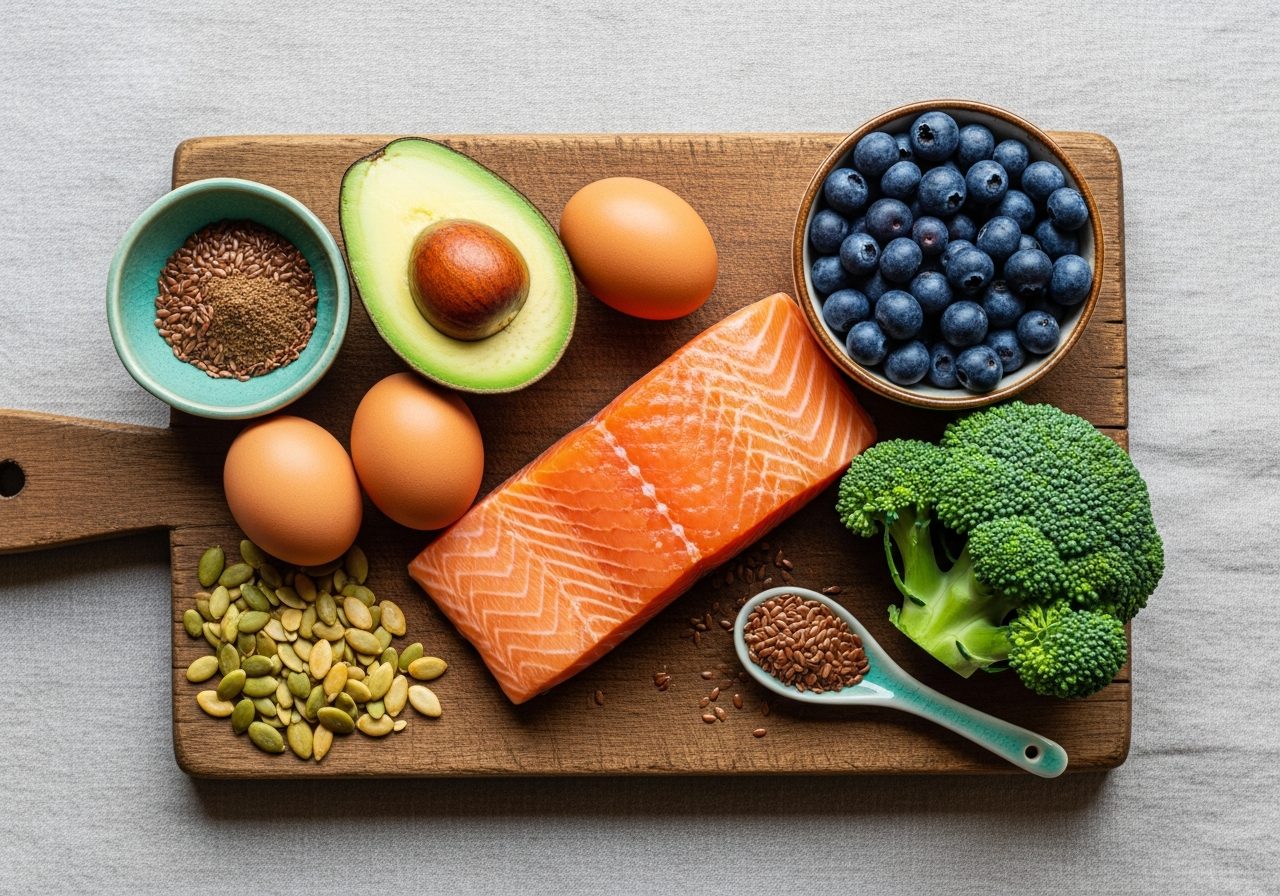
Top Hormone Balancing Foods to Add to Your Diet in Princeton, NJ
Many women in Princeton, NJ are eating thoughtfully and still dealing with symptoms they cannot fully explain: energy that crashes by mid-afternoon, cycles that feel unpredictable, a persistent undercurrent of anxious tension, or weight that redistributes without explanation. These are not signs of aging or bad luck. They are often signs that the body is not getting consistent nutritional support for hormonal function.
Hormone balancing foods work because hormones are not produced in a vacuum. Every steroid hormone your body makes requires raw materials, mostly fats and micronutrients. Every hormone signal depends on receptors that function only when inflammation is low and blood sugar is steady. And every hormone your liver processes has to be cleared through pathways that depend on fiber, specific nutrients, and a healthy gut. This post names the specific foods, not just the categories, so you can bring this list to a grocery run and start using it this week.
Wild Salmon: Omega-3s That Calm Hormonal Inflammation
Wild salmon is one of the most practical hormone balancing foods because it addresses inflammation, the underlying factor that disrupts hormone signaling across the board. The EPA and DHA in wild salmon reduce the inflammatory compounds that interfere with estrogen and progesterone receptors, impair insulin sensitivity, and drive the cortisol elevation that competes with progesterone production.
Two to three servings per week is the working target. Wild-caught Atlantic or Pacific salmon works well; so do sardines and mackerel if salmon is not available. The fat content is what matters, not the species. Canned wild salmon is a practical option for midweek meals.
On your grocery list: one to two wild salmon fillets, one tin of wild sardines as a backup protein.
Ground Flaxseed: Lignans and Estrogen Metabolism
Flaxseed is the most concentrated dietary source of lignans, a class of plant compounds that support estrogen metabolism in a specific and meaningful way. After digestion, lignans are converted by gut bacteria into enterolactone and enterodiol, compounds that interact weakly with estrogen receptors. Research on flaxseed supplementation and sex hormone profiles suggests this activity can support a more balanced estrogen-to-progesterone ratio, particularly relevant for women in perimenopause or those dealing with estrogen-dominant patterns.
Ground flaxseed (not whole) is what the body can actually use. Whole seeds pass through largely undigested. One to two tablespoons daily is the standard recommendation. Stir into oatmeal, blend into smoothies, or whisk into a salad dressing.
The fiber in flaxseed also feeds the estrobolome, the community of gut bacteria that determines how estrogen is cleared from the body. This makes flaxseed one of the few foods that supports hormone balance through two distinct pathways simultaneously.
On your grocery list: one bag of ground golden flaxseed.
Avocado: Monounsaturated Fats and Cortisol Regulation
Avocados supply monounsaturated fat alongside a meaningful amount of potassium and magnesium, a combination that makes them useful for adrenal support. The monounsaturated fats provide raw material for steroid hormone synthesis, the same pathway that requires cholesterol. Meanwhile, potassium helps regulate aldosterone (a stress-related adrenal hormone) and magnesium is involved in over 300 enzymatic reactions, many of them connected to cortisol response.
Women who are chronically stressed tend to have higher cortisol output, which competes directly with progesterone. Avocado does not replace a broader stress-management approach, but as a daily food, it gives the adrenal system consistent nutritional coverage. Julia's post on Good Fats Are Essential explores how healthy fats work in the context of hormonal health and body composition more broadly.
Half an avocado at breakfast or lunch, most days of the week, is a reasonable and sustainable target. Pair it with eggs for a complete hormone-supportive meal.
On your grocery list: three to four ripe avocados.
Eggs: Cholesterol as Steroid Hormone Precursor
Eggs have been mischaracterized for decades. The truth is that dietary cholesterol from whole food sources like eggs is one of the primary building blocks for every steroid hormone the body produces, including estrogen, progesterone, testosterone, cortisol, and DHEA. Without adequate cholesterol, hormone production is constrained at the very first step.
Eggs also provide choline (critical for liver function and the methylation pathways involved in estrogen clearance), B vitamins (B6 and B12 both play roles in hormone metabolism), and the most complete amino acid profile of any single food. Two to three whole eggs daily is well-supported for most healthy women.
Pasture-raised eggs offer more omega-3s than conventional eggs and are worth the modest price premium if accessible.
On your grocery list: one dozen pasture-raised eggs.
Brazil Nuts: Selenium for Thyroid Hormone Conversion
Thyroid hormones sit at the center of energy, metabolism, and mood, and selenium is the mineral the body cannot do without for thyroid function. The thyroid gland has the highest selenium concentration of any organ; selenium is required for the enzyme that converts T4 (the storage form of thyroid hormone) into the active T3 form that cells can use.
One to three Brazil nuts daily provides sufficient selenium without exceeding the safe range. This is one of the few situations in nutrition where more is not better: selenium toxicity is real, and eating four or more Brazil nuts daily over time can tip into excess. Three is a conservative, safe target.
Brazil nuts are easy to add to a snack rotation. A small handful of mixed nuts anchored by two to three Brazil nuts, eaten mid-afternoon, takes under a minute to prepare.
On your grocery list: one small bag of raw Brazil nuts.
Pumpkin Seeds: Zinc, Magnesium, and the Menstrual Cycle
Pumpkin seeds are among the best plant-based sources of zinc and magnesium together, two minerals with direct roles in hormonal regulation. Zinc supports follicle-stimulating hormone (FSH) production and is involved in progesterone synthesis during the second half of the cycle. Magnesium helps reduce PMS-related symptoms, supports deeper sleep (which itself is a hormonal regulator), and modulates cortisol response.
Two to three tablespoons of raw or lightly roasted pumpkin seeds daily is enough to move the needle. They mix well into salads, work as a yogurt topping, and add a satisfying crunch to roasted vegetables.
Women who track their cycles often find that consistent pumpkin seed intake in the luteal phase (after ovulation) correlates with better mood stability and less cramping, likely through the progesterone-zinc pathway and magnesium's effect on smooth muscle tension.
On your grocery list: one bag of raw pumpkin seeds (pepitas).
Blueberries: Polyphenols That Protect Hormone Receptors
Blueberries earn their place on this hormone balancing foods list not through one dramatic mechanism but through the cumulative effect of their polyphenol content. Polyphenols reduce oxidative stress, which damages cell membranes, including the hormone receptors embedded in them. When estrogen and cortisol receptors are damaged by oxidative stress, even normal hormone levels cannot signal effectively.
Blueberries also support the liver's detoxification capacity through their antioxidant load. The liver is responsible for packaging estrogen for excretion; when it is burdened by poor diet, alcohol, or environmental toxins, estrogen accumulates. A handful of blueberries most mornings adds meaningful antioxidant coverage with almost no preparation.
Frozen wild blueberries are nutritionally equivalent to fresh and often better-sourced. Mixed berries (raspberries, blackberries, strawberries) provide a range of polyphenol types, so varying the mix is worth doing.
On your grocery list: one bag of frozen wild blueberries, one container of fresh raspberries.
Broccoli: DIM and Estrogen Clearance
Broccoli works for hormone balance through two compounds produced during digestion: DIM (diindolylmethane) and indole-3-carbinol (I3C). Both support the liver's conversion of more potent estrogen forms into milder, more easily cleared metabolites. This is especially relevant for women experiencing estrogen-dominant patterns (heavy periods, persistent PMS, perimenopausal weight gain around the hips and abdomen).
Light steaming preserves more of the active compounds than boiling. Two to three cups cooked per week is a meaningful frequency. Broccoli is also a solid source of magnesium and fiber, adding to its hormone-supportive profile.
For a deeper look at why this vegetable family deserves a permanent place in a weekly rotation, Julia's post on cruciferous vegetables regularly walks through the specific compounds and their effects in detail.
On your grocery list: two heads of broccoli or a bag of frozen broccoli florets.
Bone Broth: Amino Acids and the Gut-Hormone Connection
The gut's role in hormone metabolism is central, particularly through the estrobolome (the community of gut bacteria that regulates estrogen recycling). Bone broth supports this connection not directly, but through the gut lining. Glycine and proline, the primary amino acids in bone broth, are the structural materials for intestinal epithelial tissue. A well-maintained gut lining prevents the low-grade systemic inflammation that disrupts hormone signaling.
One cup of quality bone broth daily, or three to four times per week, is practical and sustainable. It also makes an excellent base for soups and sauces, so it integrates easily into existing cooking habits. Julia's guide to the magic of broth covers the preparation and sourcing side for anyone starting fresh with it.
On your grocery list: one carton of quality grass-fed beef or chicken bone broth.
Hormone Balancing Foods: Building a Weekly Grocery Cycle
No single food on this list is a stand-alone cure. The pattern across a week is what creates change. A practical structure:
- Monday and Thursday: wild salmon with a side of broccoli and avocado
- Daily: one to two tablespoons ground flaxseed (into oatmeal or a smoothie)
- Daily: two to three eggs at breakfast with half an avocado
- Daily snack: a small handful of mixed nuts anchored by two to three Brazil nuts
- Daily: two to three tablespoons pumpkin seeds (into salads, yogurt, or roasted vegetables)
- Daily: a handful of blueberries or mixed berries (fresh or frozen)
- Three to four times per week: one cup bone broth with dinner or as a mid-afternoon warm drink
Within three to four weeks of this pattern, most women notice improvements in energy consistency, reduced PMS severity, and better sleep. These are not dramatic transformations. They are the body returning to a baseline it was always capable of maintaining given consistent nutritional support.
For a complementary look at the hormone-food relationship organized by category rather than by specific food, the Jersey City post on balancing hormones naturally covers the same landscape from a different angle and is worth reading alongside this one.
Starting Where You Are, in Princeton, NJ
Jolie's clients who come from the Princeton area tend to be highly health-literate and already thinking carefully about what they eat. What is often missing is not knowledge but specific, grocery-ready direction. The question is rarely "should I eat more whole foods" but "which ones, in what amounts, and how often."
This list answers that question in practical terms. Bring it to the store. Build the pattern for a month. Then notice what has shifted. Princeton is central NJ, and Jolie's reach extends through the region. The Jolie Method is about building nutrition that works in real life, and if you are ready to go deeper, begin here to explore what one-on-one support with Julia looks like.

Looking for personalized, science-based support in Princeton? Explore Jolie's wellness programs in New Jersey.