
Menopause
Balanced Diet for Hormonal Imbalance in Morristown, NJ
April 14, 2026 · Julia Erickson
Balanced Diet for Hormonal Imbalance in Morristown, NJ
The women who walk into Jolie's clinic in Morristown describe it almost exactly the same way. The fatigue that sleep doesn't fix. The weight that holds on no matter what they eat. The PMS that turned brutal somewhere after 35. Cycles that shifted. Moods that don't feel like theirs. These are not vague complaints. They are recognizable patterns of hormonal imbalance, and they are directly addressable through food.
This is not a post about "eating clean" in a general sense. A balanced diet for hormonal imbalance is something more specific: a targeted nutritional approach for women who are already symptomatic and want to understand what to eat, why it matters, and how to structure their days so food actually starts working in their favor.
Why Hormonal Imbalance Has a Nutritional Root
Your hormones are not manufactured out of thin air. Estrogen, progesterone, testosterone, cortisol, and thyroid hormone all depend on raw materials (fats, proteins, micronutrients) that come from food. When those materials are in short supply, or when the metabolic pathways that build and clear hormones are disrupted, symptoms follow.
Three mechanisms drive most of what women experience:
The first is blood sugar instability. Every time blood sugar spikes and crashes, cortisol spikes with it. Chronically elevated cortisol suppresses progesterone production and interferes with thyroid hormone conversion. Women who skip breakfast, run on coffee, or eat mostly carbohydrates in the morning are inadvertently running their stress axis at full tilt before 9 a.m.
The second is impaired estrogen clearance. The liver processes used estrogen so it can be excreted. When the gut's bacterial ecosystem (specifically the estrobolome, the collection of gut bacteria that metabolize estrogen) is imbalanced, or when the liver's detox pathways are sluggish, estrogen recirculates. This drives symptoms like PMS, breast tenderness, heavy periods, and weight gain concentrated around the hips and abdomen.
The third is micronutrient depletion. Magnesium, zinc, B6, iodine, and selenium are all required for hormone synthesis and conversion. Modern diets, even "healthy" ones, frequently fall short on these, particularly in women who have been restricting calories or eating low-fat for years.
Understanding these three mechanisms is what turns food choices from general wellness advice into actual therapeutic leverage.
Building a Balanced Diet for Hormonal Imbalance
Start the Morning with Protein and Fat, Not Coffee and Carbs
The single highest-leverage change most women can make is what they eat in the first hour of waking. Morning cortisol follows a natural peak (the cortisol awakening response) that provides energy for the day. When you skip food and drink only coffee, you amplify that cortisol spike without buffering it. Over weeks and months, this pattern erodes progesterone and drives the anxious, wired-but-tired feeling that so many women describe by their mid-thirties.
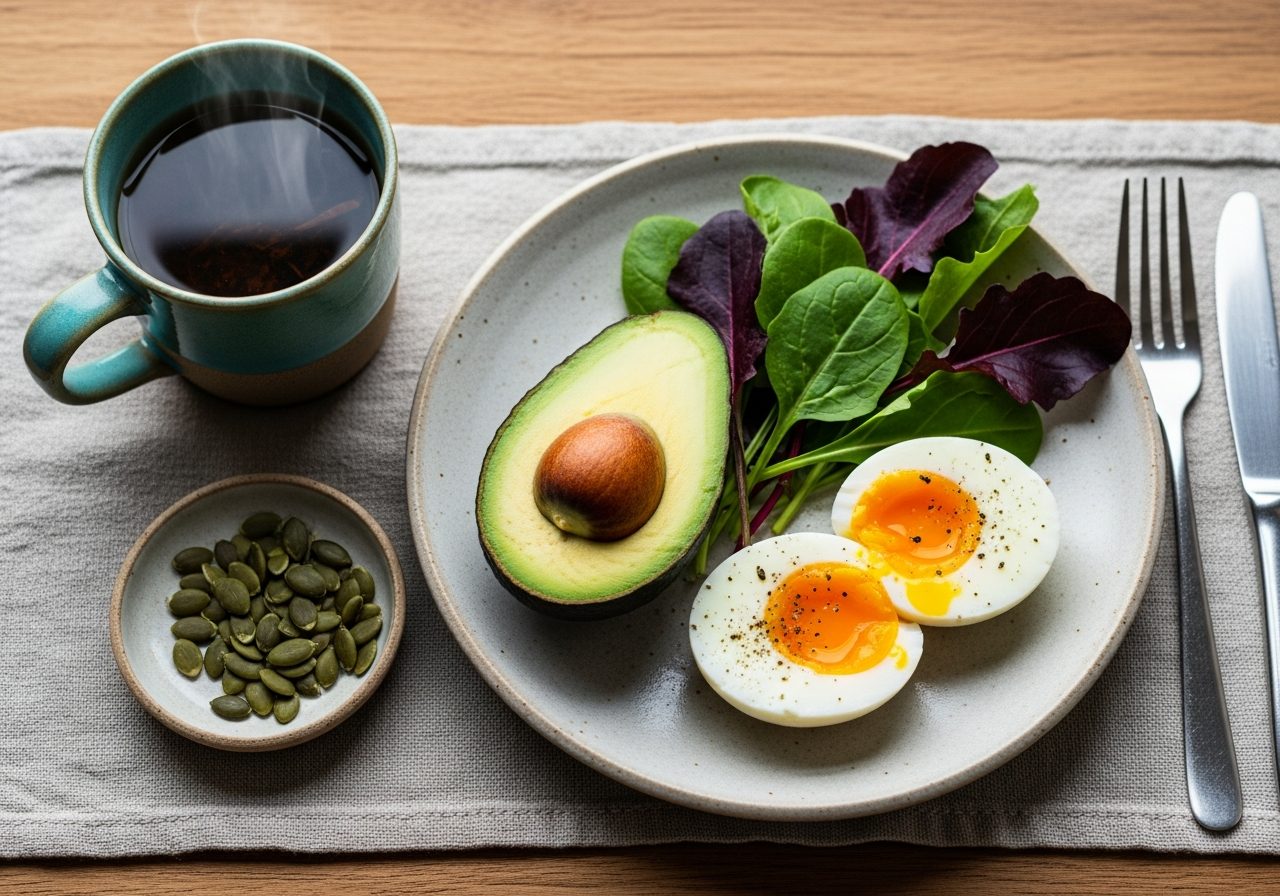
Anchoring breakfast with 25-35 grams of protein and a source of healthy fat stabilizes blood sugar before it has a chance to destabilize. Eggs with avocado, a grass-fed beef patty with sautéed greens, leftover salmon with olive oil: these are hormonal medicine in practical form. The goal is not a perfect diet. It is a breakfast that tells your nervous system the threat has passed.
Eat Enough Total Calories
Restriction is one of the fastest ways to disrupt hormonal function. The hypothalamus monitors energy availability constantly, and when calories drop too low, it downregulates gonadotropin-releasing hormone, the signal that tells the ovaries to produce estrogen and progesterone. The result is irregular cycles, worsening PMS, low libido, and in some cases, complete cessation of ovulation.
Women who have been dieting for years, or who stay in a moderate caloric deficit indefinitely, frequently present with a clinical picture that looks hormonal because it is hormonal, driven by restriction itself. Eating enough is not a failure of willpower. It is a physiological requirement for hormonal health.
Include Cholesterol-Rich Foods
Cholesterol is the molecular building block of every steroid hormone in the body. The endocrine system synthesizes estrogen, progesterone, and cortisol directly from cholesterol. Women who follow very low-fat or extremely low-calorie diets often see hormonal output decline. Not because of aging alone, but because the raw material isn't available.
Egg yolks, grass-fed dairy, and organ meats (liver once a week is particularly effective) are among the most efficient dietary sources of cholesterol and fat-soluble nutrients. These foods were avoided for decades based on cardiovascular assumptions that have since been substantially revised. For hormonally symptomatic women, they are frequently part of the solution.
Fiber for Estrogen Clearance
The estrobolome (the community of gut bacteria that deactivate estrogen so it can be excreted) requires adequate dietary fiber to function. Without enough fiber, estrogen that should be eliminated gets reabsorbed in the colon. The result is estrogen dominance: heavier periods, more severe PMS, breast tenderness, and difficulty losing weight.
Targeting 30-40 grams of fiber daily from whole foods (vegetables, legumes, fruits, nuts, seeds) supports the estrobolome and keeps estrogen moving through the system rather than recirculating. Cruciferous vegetables deserve special mention here: broccoli, cabbage, Brussels sprouts, cauliflower, and kale contain compounds called DIM (diindolylmethane) and I3C (indole-3-carbinol) that directly support Phase II liver detoxification of estrogen.
Seed Cycling
Seed cycling uses different seeds in alignment with the two phases of the menstrual cycle to support hormone production. In the follicular phase (days 1-14 from the first day of bleeding), one tablespoon each of flaxseeds and sesame seeds supports estrogen production. In the luteal phase (days 15-28), one tablespoon each of pumpkin seeds and sunflower seeds supports progesterone. For women in perimenopause or with irregular cycles, many practitioners use the moon cycle as a proxy.
The evidence for seed cycling is still accumulating, but the individual seeds have documented hormonal effects: flaxseed's lignans modulate estrogen receptors, and pumpkin seeds are among the best dietary sources of zinc, which is required for progesterone synthesis.
Magnesium-Rich Foods
Magnesium is involved in over 300 enzymatic reactions in the body, including the regulation of blood sugar, the production of progesterone, the modulation of cortisol, and the quality of sleep. It is also one of the most commonly depleted minerals in modern diets, and its depletion directly worsens PMS, mood swings, sleep disruption, and the blood sugar instability that drives cortisol dysregulation.
The best dietary sources are dark leafy greens (particularly spinach and Swiss chard), pumpkin seeds, almonds, dark chocolate (80%+ cacao), avocado, and black beans. Prioritizing these foods daily is one of the simplest and most impactful nutritional interventions for hormonally symptomatic women.
Adaptogens as an Adjunct
Adaptogenic herbs do not replace nutritional fundamentals, but they can support the stress axis when hormones are actively disrupted. Ashwagandha has the most evidence for cortisol modulation and thyroid support. Maca has a long traditional use for perimenopausal symptoms. Rhodiola may help with fatigue and mood. These are useful additions to a well-structured diet, not substitutes for it.
If you are taking any medications or have thyroid conditions, check with your practitioner before adding adaptogens.
A Sample Day for Hormonal Imbalance
A day structured around hormonal support might look like this:
Morning: Soft-scrambled eggs with sautéed spinach in butter, half an avocado, and a tablespoon of ground flaxseed stirred into full-fat yogurt. Herbal tea or chicory root instead of multiple cups of coffee.
Midday: A large salad with roasted salmon, arugula, roasted beets, pumpkin seeds, and an olive oil dressing. Dark chocolate (a square or two) afterward.
Afternoon: If hunger appears, almonds or full-fat cheese with sliced vegetables. Not a coffee refill.
Evening: A protein-centered dinner with cruciferous vegetables (roasted broccoli or cabbage) and a complex carbohydrate like sweet potato or black beans. Magnesium-rich dark leafy greens on the side.
This is not a prescription. It is a pattern. The structure is what matters: protein and fat first, fiber throughout, micronutrients prioritized, blood sugar protected.
What to Reduce
The "balanced diet" framing matters here. Balance is not only about what to add. It is equally about what to reduce.
Refined sugar is the most direct driver of blood sugar instability and therefore cortisol dysregulation. Alcohol intensifies this effect and becomes particularly problematic during perimenopause, when the liver is already working harder to process fluctuating estrogen. Even moderate alcohol consumption in perimenopause can worsen hot flashes, disrupt sleep, and slow estrogen clearance. The perimenopause transition makes the liver more sensitive to these inputs.
Excessive caffeine keeps cortisol elevated and can suppress progesterone. Ultra-processed foods deliver a combination of refined carbohydrates, industrial seed oils, and additives that collectively impair gut function and micronutrient absorption. And restrictive diets (already discussed above) remain one of the most underappreciated drivers of hormonal disruption in women.
What a Balanced Diet Supports (and What It Doesn't)
Food is genuinely powerful here. A diet structured around the principles above addresses real physiological mechanisms: it stabilizes cortisol, supports estrogen clearance, provides the raw materials for hormone synthesis, and protects gut function. Most women notice meaningful changes within four to eight weeks of consistent implementation.
But food alone may not be enough if hormonal imbalance has progressed significantly. Thyroid disorders, PCOS, premature ovarian insufficiency, and significant perimenopausal transition often require additional clinical support. Signs that it's worth consulting a practitioner: symptoms that are severe or rapidly worsening, irregular cycles that have lasted more than three months, hair loss, significant weight changes despite normal eating, or PMS that has become debilitating.
If your blood sugar stability is still erratic after dietary changes, or if mood and energy shifts feel out of proportion to your lifestyle, a functional nutrition assessment can identify specific patterns that food alone may not fully resolve.
Eating for Your Hormones in Morristown and Beyond
Jolie's clients in Morristown and across Northern NJ come in describing what feels like their bodies turning against them. What they're usually experiencing is a fixable nutritional deficit playing out across their hormonal system. The clinical picture is real, but the pathway through it is often more straightforward than they expect.
Start with breakfast. Protect your blood sugar. Eat enough. Add fiber, cruciferous vegetables, and magnesium-rich foods daily. Stop restricting and start nourishing. These changes shift the underlying biochemistry, not just the surface symptoms.
If you're looking at what else to address alongside hormones, the broader question of hormone balance connects directly to weight, mood, and energy in ways that a single approach can't always resolve alone. Women across Northern NJ dealing with hormonal imbalance are also finding value in pairing nutrition with an anti-inflammatory food list and understanding how the gut-hormone axis works in practice.
If you're exploring what food changes look like for hormonal symptoms at different stages of life, the approaches in our posts on hormone-balancing foods (for Jersey City clients) and top hormone balancing foods (for Princeton clients) offer companion frameworks if you want to compare angles.
Begin here. Begin with your next meal.
Looking for personalized, science-based support in Morristown? Explore Jolie's wellness programs in Morristown.