
Menopause
The Best Diet for Gut Health, According to Functional Nutrition in Princeton, NJ
May 24, 2026 · Julia Erickson
The Best Diet for Gut Health, According to Functional Nutrition in Princeton, NJ
If you searched "best diet for gut health," you're probably not looking for another list of fermented foods. You're trying to decide between real frameworks: Mediterranean, Low-FODMAP, GAPS, Paleo, SCD. You want someone to tell you which one actually works, and why.
I'm going to do that. After years of working with clients in functional nutrition, I have a clear clinical recommendation. But first, it's worth understanding what the other frameworks are actually designed to do, because choosing the wrong tool for your situation is just as common as choosing no tool at all.
The good news for my clients in Princeton, where access to quality food is genuinely excellent, is that the best diet for gut health is also one of the most practical and enjoyable ways to eat.
Why There's No Single "Best Diet" (And Why That's Not a Cop-Out)
The honest answer to "which is best" depends on one question: what is your gut trying to solve?
Gut dysfunction shows up in many forms. IBS with bloating and cramping is a different clinical problem from Crohn's disease flares, which is different from general dysbiosis (an imbalanced microbiome without a formal diagnosis), which is different from a post-antibiotic gut that just needs rebuilding. Each condition has different drivers, and the research points to different dietary tools for each one.
What the research does agree on, consistently, is this: there is one dietary pattern with the broadest evidence base for supporting gut microbiome health across the general population. That pattern is the Mediterranean diet.
For specific clinical conditions (diagnosed IBS, inflammatory bowel disease, suspected food sensitivities), a targeted protocol may be the right starting point. I'll cover those too. But for most people who want to build a genuinely healthy gut and keep it that way, the evidence leads to the same place.
The Major Diet Patterns: What Each Is Actually For
Before I make my recommendation, here is an honest summary of the frameworks you'll encounter:
Mediterranean Diet
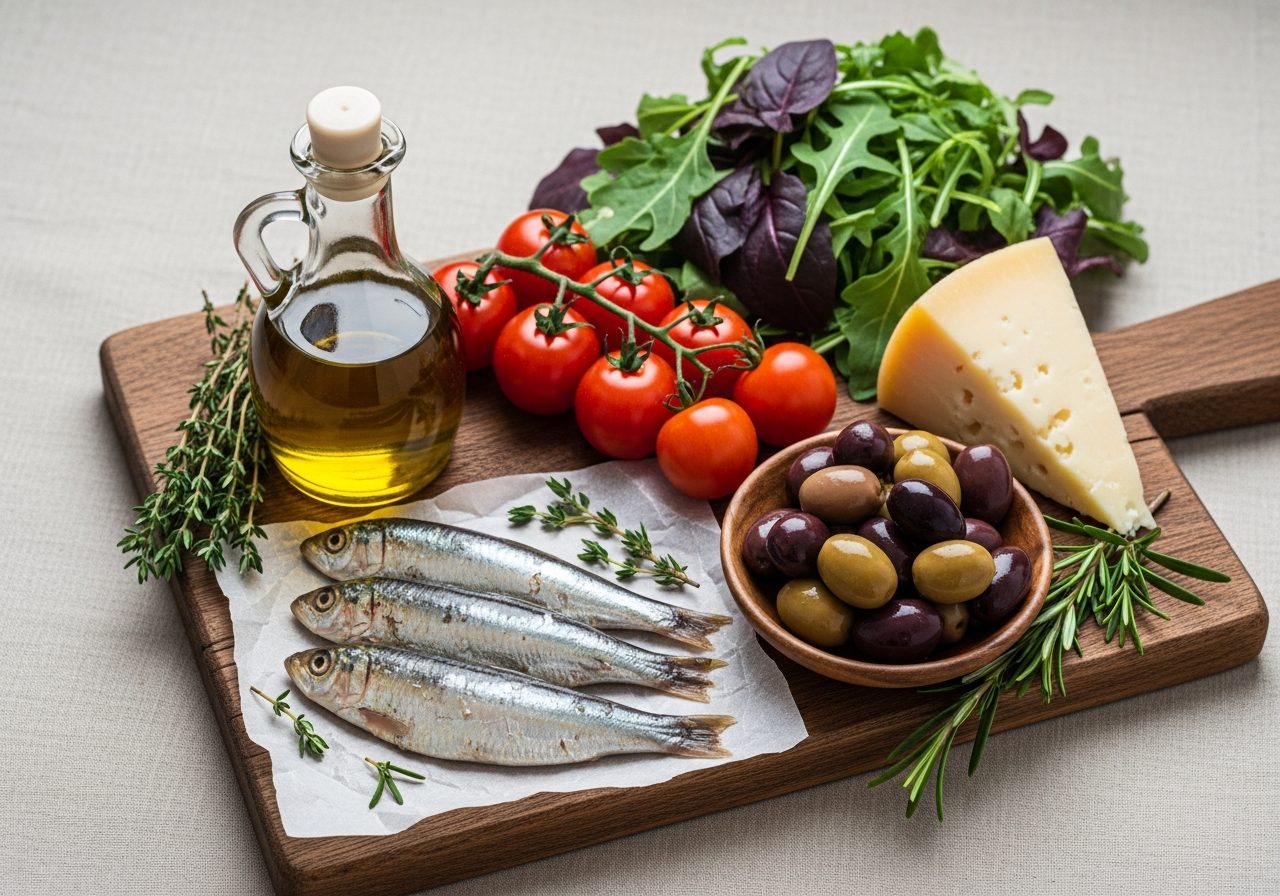
The Mediterranean Diet is built on abundant vegetables and fruits, whole grains, legumes, nuts and seeds, olive oil as the primary fat, fish and seafood regularly, and fermented dairy (yogurt, aged cheeses) in moderation. Red meat is minimal. Wine is present in the traditional pattern, but moderate.
Its evidence base for gut health is the strongest of any dietary pattern in the research literature. Multiple systematic reviews and randomized controlled trials have documented its effects on microbiome composition: increased abundance of beneficial strains like Bifidobacterium and Faecalibacterium prausnitzii, greater production of short-chain fatty acids that feed the gut lining, and reduced markers of intestinal inflammation. A 2024 systematic review in BMC Medical Genomics confirmed that adherence to the Mediterranean diet consistently and beneficially shifts gut microbiota composition.
Importantly, the Mediterranean diet is not a short-term protocol. It is a sustainable, lifelong way of eating. That matters enormously for gut health, because the microbiome responds to patterns over time, not to a single week of clean eating.
Low-FODMAP Diet
Developed by researchers at Monash University in Australia, the low-FODMAP approach was designed specifically for people with diagnosed Irritable Bowel Syndrome (IBS). It eliminates fermentable short-chain carbohydrates that trigger symptoms in sensitive guts, then systematically reintroduces them to identify personal triggers. Monash research shows IBS symptoms improve in approximately 3 out of 4 people who follow it.
One critical distinction: Low-FODMAP is a diagnostic and symptom-management tool, not a long-term gut-building diet. Many high-FODMAP foods (onions, garlic, legumes, stone fruits) are outstanding for gut microbiome diversity. Staying on a strict low-FODMAP diet indefinitely can actually reduce microbiome diversity over time. It is a short-term protocol that leads to a personalized, expanded eating pattern.
Specific Carbohydrate Diet (SCD)
The SCD eliminates most complex carbohydrates, including all grains, most sugars, and starchy vegetables, on the premise that these foods feed harmful bacteria in an already-compromised gut. It was developed for IBD management and has shown meaningful results in Crohn's disease. A large NIH-funded randomized trial (the DINE-CD study) found that both the SCD and a Mediterranean-style diet significantly improved symptoms and quality of life in adults with mild-to-moderate Crohn's.
For most people without IBD, the SCD is unnecessarily restrictive. It eliminates many prebiotic foods (legumes, oats, certain vegetables) that are genuinely valuable for microbiome health in a non-inflamed gut.
GAPS Diet
GAPS (Gut and Psychology Syndrome) is a highly restrictive protocol built around bone broth, well-cooked vegetables, and fermented foods, with an initial phase that removes almost all plant fiber. It has a passionate following and anecdotal evidence of benefit in severe gut dysfunction and some neurological conditions. Peer-reviewed clinical trial data is limited. I use it selectively with clients who present specific patterns that don't respond to less restrictive approaches, but I do not recommend it as a starting framework.
Whole30
Whole30 is a 30-day elimination protocol: no grains, legumes, dairy, added sugar, or alcohol. It is useful as an identification tool for food sensitivities and as a reset from ultra-processed eating. It is not designed as a long-term gut-health diet, and the legume elimination removes one of the best prebiotic food categories available.
Paleo
Paleo eliminates grains and legumes, emphasizing animal proteins, vegetables, fruits, nuts, and seeds. It does reduce ultra-processed food, which is genuinely positive. But the elimination of legumes and whole grains removes two significant sources of the diverse fiber that gut bacteria need. The evidence for long-term microbiome benefit is moderate at best.
AIP (Autoimmune Protocol)
AIP is an aggressive elimination protocol designed for autoimmune conditions. It removes grains, legumes, dairy, eggs, nightshades, nuts, and seeds during its elimination phase. It has real clinical utility for autoimmune patients working with a qualified practitioner. As a general gut health diet, it is far too restrictive for most people and can lead to microbiome diversity loss.
My Clinical Recommendation: Mediterranean-Pattern with Functional Nutrition Adjustments
After reviewing the evidence, my recommendation for most clients is a personalized Mediterranean-pattern diet, adjusted through a functional nutrition lens.
Here is what that looks like in practice:
The standard Mediterranean framework is excellent. I refine it in a few ways:
Alcohol is tightened or removed. The traditional Mediterranean pattern includes wine in moderate amounts. In my clinical work, alcohol is consistently a gut disruptor, even in small quantities, for people with active gut dysfunction or hormonal imbalance. I recommend starting without it and reintroducing based on individual response.
Fermented foods are expanded. The Mediterranean pattern includes fermented dairy, which is a good start. I extend this to include kimchi, sauerkraut, miso, and water kefir for broader probiotic diversity. My clients in Princeton often find that Whole Foods carries a reliable selection of raw fermented vegetables, which makes this practical to maintain week to week.
Grain quality is attended to. Refined grains are minimized. When grains are included, I recommend sourdough, ancient grains like einkorn or emmer, and properly prepared oats. Grain quality affects both the fiber composition reaching the gut and the glycemic load affecting the microbial environment.
Bone broth is incorporated. This is one piece I borrow from the GAPS tradition. Bone broth is rich in glycine, glutamine, and collagen precursors that support gut lining integrity. It fits naturally into a Mediterranean-pattern eating style and adds meaningful gut-supportive value, particularly after illness or antibiotic use.
Individual food sensitivities are identified. Not every food that is "good for the gut" in population studies will serve every individual. If a client is having persistent symptoms on an otherwise clean Mediterranean diet, we use a structured elimination and reintroduction process to identify personal sensitivities (particularly to nightshades, eggs, or dairy) before assuming the whole framework isn't working.
Why Mediterranean Wins for Gut Health
The reason I recommend a Mediterranean-pattern as the foundation comes down to three things: evidence volume, microbiome mechanism, and sustainability.
No other dietary pattern has been studied as extensively for its effects on the gut microbiome. The research base spans multiple decades, multiple populations, and multiple research methods. The mechanistic story is also clear: high plant diversity feeds diverse bacterial populations, polyphenols in olive oil and berries act as prebiotics, fermented foods introduce beneficial strains, anti-inflammatory fats from fish reduce gut inflammation, and abundant fiber fuels the short-chain fatty acid production that keeps the gut lining intact.
Crucially, the gut microbiome responds to consistent, sustained eating patterns. Short-term cleanses and elimination diets can produce noticeable changes in symptoms, but the long-term composition of the microbiome is shaped by what you eat most of the time, over months and years. A lifelong Mediterranean-pattern diet is something you can actually sustain. That is ultimately why it outperforms more restrictive protocols for most people.
When to Choose a More Clinical Protocol
There are situations where I recommend starting with a clinical protocol before transitioning to a Mediterranean-pattern baseline:
If you have diagnosed IBS with specific trigger symptoms, a supervised low-FODMAP elimination phase makes sense as a first step. The goal is identification, not permanent restriction. You work through reintroduction, identify your personal trigger foods, and build your Mediterranean-pattern diet around that knowledge.
If you have diagnosed Crohn's disease or ulcerative colitis, work with your gastroenterologist and consider whether the SCD or Mediterranean-IBD adaptation is the right clinical intervention. The research on SCD for Crohn's specifically is encouraging.
If you have significant gut dysbiosis with symptoms that haven't responded to a clean whole-foods diet, a functional nutrition assessment is warranted before committing to any protocol. The drivers could be SIBO (small intestinal bacterial overgrowth), parasitic infection, or other conditions that require targeted interventions before a dietary framework will hold.
What Every Gut-Supporting Diet Has in Common
Whether you are following a Mediterranean diet, recovering from a GAPS reset, or reintroducing after Low-FODMAP, the principles that make any gut diet work share a common core:
Diversity of plants is the most consistent predictor of microbiome health. Eating 30 or more different plant foods per week dramatically expands the range of beneficial bacterial populations.
Adequate and varied fiber from whole food sources (vegetables, legumes, whole grains, fruit) feeds the gut bacteria that produce short-chain fatty acids.
Fermented foods introduce and sustain beneficial microbial populations.
Anti-inflammatory fats from fatty fish, olive oil, and nuts reduce the intestinal inflammation that disrupts gut barrier function. Leafy greens and cruciferous vegetables are particularly valuable here for their contribution of folate, magnesium, and sulfur compounds.
Minimal ultra-processed food removes the emulsifiers, artificial sweeteners, and refined starches that research consistently associates with dysbiosis and increased intestinal permeability.
Mindful eating (eating slowly, without screens, and in a relaxed state) supports the parasympathetic nervous system engagement that digestion actually requires.
The Princeton Angle
Princeton's food environment makes a Mediterranean-pattern diet genuinely accessible. The Whole Foods on Nassau Street keeps a consistent selection of quality olive oil, wild-caught fish, raw fermented vegetables, and diverse seasonal produce. The Princeton Farmers Market at Hinds Plaza (seasonal) brings local vendors with fresh vegetables that make the 30-plant-per-week target achievable without effort.
My clients in Princeton and throughout Mercer County often tell me they already eat "pretty well." What functional nutrition adds is precision: moving from "healthy in general" to a gut-intentional pattern that accounts for their individual history, sensitivities, and health goals. The framework is Mediterranean at its core. The personalization is where the clinical work happens.
If you are ready to move from guessing to a plan built specifically for your gut, that is exactly the work we do together. For more on specific foods within a gut-health eating pattern, see our guides on fermented foods for gut health and foods that support gut microbiome health. If you are also working on hormone balance, our companion guide on hormone balancing foods covers the overlap between gut health and hormonal function for women in Princeton. For the weekly architecture of a gut-supportive diet, see how to build a balanced gut diet.
Looking for personalized, science-based support in Princeton? Explore Jolie's wellness programs in New Jersey.