
Menopause
Fermented Foods for Gut Health: Beginner's Guide in Caldwell, NJ
April 23, 2026 · Julia Erickson
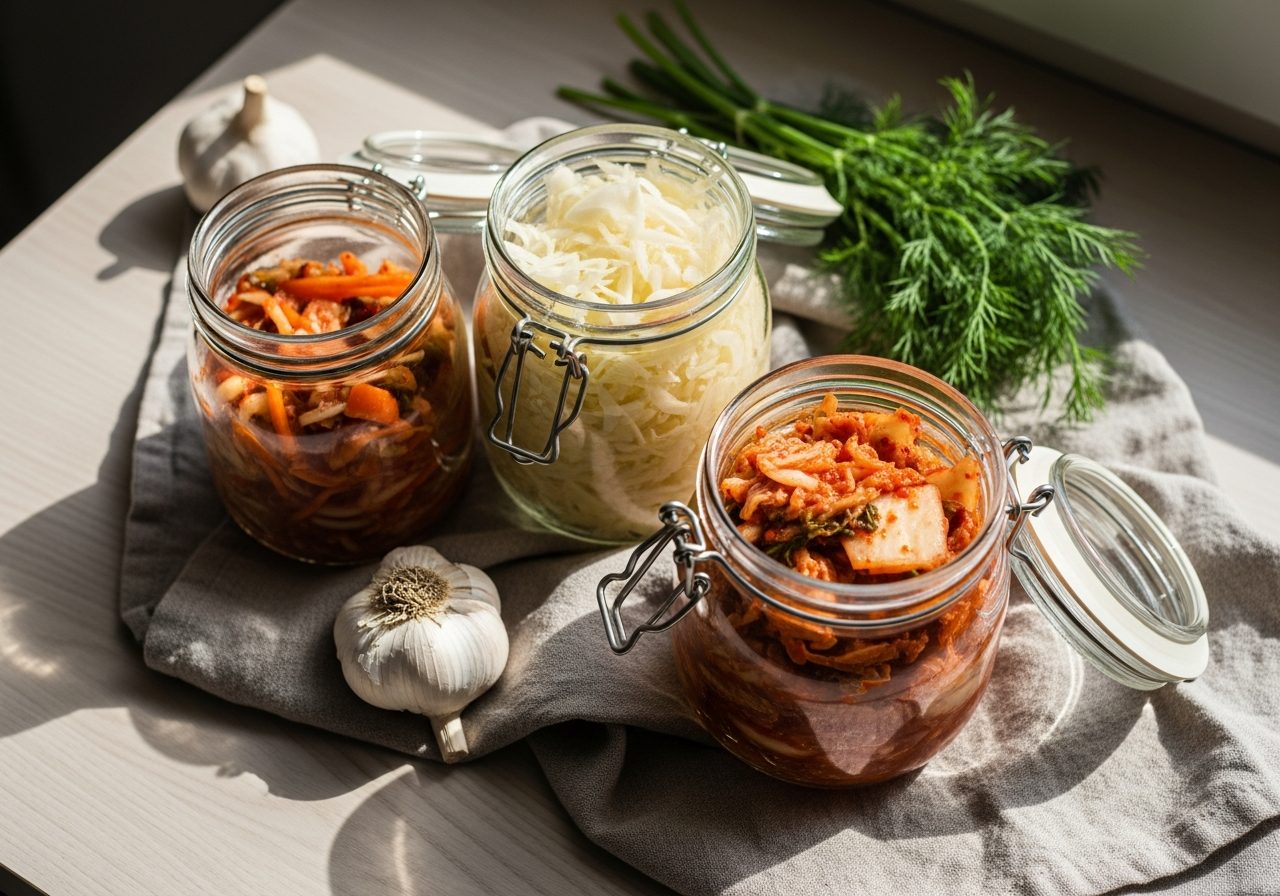
Your gut holds trillions of microorganisms that shape everything from your digestion and immune strength to your hormone balance and mood. Fermented foods for gut health represent one of the most ancient, effective ways to nourish that ecosystem, and for clients in Caldwell, NJ who are just beginning to explore this territory, they are an accessible and deeply satisfying place to start.
The concept is simple: certain foods have been transformed by beneficial bacteria or yeast during a controlled fermentation process. That transformation produces live microorganisms, bioactive compounds, and acids that your gut recognizes and uses. The result is food that does far more than fuel you.
What Fermented Foods Actually Do for Your Gut
When you eat fermented foods, you are introducing live bacteria into your digestive system (specifically strains like Lactobacillus and Bifidobacterium) that support a balanced microbiome. These organisms compete with harmful bacteria, strengthen the gut lining, and promote the production of short-chain fatty acids, compounds that reduce intestinal inflammation and help regulate blood sugar.
A landmark study published in the journal Cell found that participants who ate a diet high in fermented foods for ten weeks significantly increased their microbiome diversity while also decreasing markers of systemic inflammation, including interleukin-6, a key driver of chronic inflammatory conditions. Those results point to something profound: fermented food diets can shift immune status in meaningful, measurable ways.
For anyone dealing with sluggish digestion, bloating, skin flares, or fatigue tied to gut imbalance, this is not a minor upgrade. It is a foundational one.
The Best Fermented Foods to Start With
Not all fermented foods contain live cultures. Commercially pickled vegetables made with vinegar, for instance, do not deliver probiotics the way naturally fermented versions do. The ones you want are made through lacto-fermentation or culture fermentation, where live bacteria do the work. Harvard Health notes that a telltale sign of naturally fermented food is bubbles in the liquid when you open the jar, a sign that live organisms are still active inside.
Here are the six most beginner-friendly fermented foods:
Yogurt
The easiest entry point. Choose plain, full-fat yogurt with "live and active cultures" on the label. Avoid flavored varieties loaded with added sugar, which feeds dysbiotic bacteria rather than beneficial ones. Yogurt made from organic, grass-fed milk is a cleaner source when you can find it.
Kefir
Think of it as drinkable yogurt with a broader range of bacterial strains. Kefir is particularly rich in Lactobacillus kefiri, a strain that studies have linked to reduced pathogenic bacteria in the gut. It is tangier than yogurt and works well in smoothies if you are easing into the flavor.
Sauerkraut
Fermented cabbage, made with nothing but cabbage and salt. It is one of the most researched fermented foods and a reliable source of Lactobacillus plantarum. Buy it refrigerated (shelf-stable canned sauerkraut is pasteurized and kills the cultures). A spoonful on the side of any protein-forward meal is a simple daily habit.
Kimchi
The Korean cousin of sauerkraut, made with napa cabbage, radish, garlic, ginger, and chili. Beyond its probiotic strains, kimchi contains prebiotic fibers that feed beneficial bacteria already living in your gut, and the garlic and ginger provide anti-inflammatory compounds. It adds a bold, complex flavor to grain bowls, eggs, or anything that benefits from brightness.
Miso
A fermented paste made from soybeans (or sometimes rice or barley). A tablespoon dissolved into warm (not boiling) broth makes a fast, mineral-rich soup. The key: add miso after you take the broth off the heat. High temperatures destroy the live cultures.
Kombucha
Fermented tea made through a SCOBY culture. It provides organic acids, B vitamins, and beneficial yeasts alongside bacterial cultures. Kombucha is lower in live bacteria than dairy ferments or sauerkraut, but it offers variety and something to reach for when you want an alternative to soda or juice.
How to Introduce Fermented Foods Without the Bloat
One of the most common mistakes beginners make is starting too aggressively. When your microbiome is imbalanced (as it often is after years of processed food, antibiotic use, or chronic stress), introducing large amounts of new bacteria can cause gas, bloating, or changes in bowel rhythm. This is not a sign something is wrong. It is a sign your gut is adjusting.
The approach that works:
- Start with a single fermented food, not three at once.
- Begin with a small amount: one to two tablespoons of sauerkraut or kimchi, or a quarter cup of yogurt, per day.
- Have fermented foods with meals rather than on an empty stomach. The food around them buffers the acidity and the microbial shift.
- Increase slowly over two to four weeks, paying attention to how your digestion responds.
- Aim for consistency. Daily small amounts outperform large occasional doses.
It is worth noting that some people with histamine sensitivity, yeast overgrowth, or a severely dysbiotic gut may need to proceed even more cautiously, or to address the underlying imbalance before loading up on fermented foods. Probiotics, even from whole food sources, are not the right starting point for everyone, and working with a practitioner who understands your specific gut picture matters more than any individual food choice.
Fermented Foods and the Hormone Connection
The gut and your endocrine system are in constant conversation. The gut microbiome plays a direct role in the metabolism of estrogen, the regulation of cortisol signaling, and the production of neurotransmitters that influence how your body handles stress. When the microbiome is depleted or out of balance, those conversations break down.
This is why gut health is so central to hormonal balance, and why fermented foods, as consistent daily inputs, can have effects that reach well beyond digestion. Clients who start working on their gut often report improvements in their cycle regularity, skin, energy, and sleep alongside the digestive changes. None of that is coincidental.
Adding fermented foods is one piece of a larger pattern. Leafy greens provide prebiotic fiber that feeds the bacteria you are cultivating. Diversity in produce supports microbial diversity. Green leafy vegetables and fermented foods work together rather than in isolation.
What to Watch Out For
A few things that derail fermented food efforts:
Sugar undermines probiotic work. Dysbiotic bacteria thrive on sugar and will outcompete the beneficial strains you are trying to build. This matters especially with kombucha, where some brands contain significant added sugar after fermentation.
Pasteurized versions of fermented foods offer no live cultures. The heat treatment that extends shelf life also kills the bacteria. Always read labels and look for refrigerated, naturally fermented options.
Overusing commercial probiotic supplements alongside fermented foods can also backfire. The research on certain types of probiotic supplementation is less clear than the food-based evidence, and in some people, commercial probiotics may actually impair the microbiome's natural recolonization. Food first is the right approach.
Where to Start in Caldwell, NJ
If you are in the Caldwell area and just getting started, you do not need a specialty store. Most grocery stores carry refrigerated sauerkraut, live-culture yogurt, and kefir. Farmers markets in Essex County often carry small-batch fermented vegetables from local producers, and those tend to be higher in live cultures than mass-market jars.
The simplest starting protocol: add a small portion of one fermented food to one meal per day for two weeks. Track how you feel. Then add a second variety. Within a month, fermented foods can become a natural and enjoyable part of how you eat rather than a medicinal obligation.
This Is a Practice, Not a Product
The gut microbiome is dynamic. It responds to what you eat consistently over time, not to any single intervention. Fermented foods work because they deliver living inputs to a living system, day after day.
Jolie's approach to gut health is rooted in this idea: real food, thoughtfully chosen and eaten with intention, does the heavy lifting. If you are based in or around Caldwell and ready to build a gut health foundation that actually holds, this is where it begins.
Looking for personalized, science-based support in Caldwell? Explore Jolie's wellness programs in Northern New Jersey.