Wellness
How to Get Diabetes — and How Not To
August 17, 2026 · Julia Erickson
I spent part of this weekend watching people eat, an occupational hazard after years of thinking about nutrition. What struck me wasn't that anyone was eating outrageously — nobody sat down and announced they intended to eat their way into type 2 diabetes, no one had cake for breakfast or soda with dinner. What I watched instead were dozens of small, ordinary decisions made by people who believed they were choosing well.
So I want my community to know how not to get diabetes. Long term, it's a disease that ravages the body.
Preventing — even reversing — it starts with understanding what you eat at eight in the morning and three in the afternoon, how much of the day you spend sitting, what counts as a "snack" or a "light" meal, and what happens when those choices repeat thousands of times.
Type 2 diabetes isn't caused by one bad meal. It results from a carbohydrate-heavy diet, too little routine movement, and a misunderstanding that many foods and habits labeled "healthy" still feed the disease — accelerated by gradual muscle loss, weight gain, stress, and under-sleeping.
If you wanted to get type 2 diabetes, in other words, there are some remarkably ordinary ways to do it.
Misunderstand carbohydrates
This may be the most consequential mistake I see. Carbohydrates are sugar molecules; digestible carbs break down into sugars, fiber, and water. Bread, pasta, rice, oatmeal, potatoes, beans, lentils, crackers, and cereal are all carbohydrate — the food doesn't need to taste sweet for your body to treat it as one. NIH's MedlinePlus puts it plainly: carbohydrates are sugar molecules, and the body breaks all of them down into glucose.
Most people know to be wary of a doughnut. The trouble starts with lentil soup treated as nearly metabolically free because lentils are nutritious. With popcorn or pretzels swapped in for chips as if that avoids carbs. With oatmeal chosen because it's been sold as the virtuous breakfast, brown rice over white to be "healthier," a large sweet potato eaten as a vegetable.
But metabolically, they're the same — this is the critical thing to know. For someone insulin resistant, prediabetic, or working to put type 2 into remission, lentils and a doughnut land in the same bucket. Both deliver sugars the body must manage. Yes, lentils bring fiber, protein, and far more nutrition — but that halo doesn't make their carbohydrate disappear. The first lesson is learning to see carbohydrates.
The bialy and the bacon
This came up again this weekend, watching someone choose what seemed like a light breakfast. A bialy looks modest — flatter than a bagel, unassuming. Bacon beside it looked heavy and dangerous, so a person watching their blood sugar skipped the bacon and kept the bialy, sincerely believing that was the healthier call.
But if the problem is glucose, the real choice was sugar versus protein and fat. The bialy is pure carbohydrate; the bacon contributes none. Bacon is a cardiovascular question, not a blood-sugar one. If your glucose runs chronically high, cutting the fat while keeping the starch is exactly backwards.
The word "light" causes the same mistake. Cereal feels lighter than scrambled eggs. Toast and jam feels lighter than an omelet. Pasta primavera feels lighter than chicken and vegetables. A fruit smoothie feels lighter than a plate of eggs. None of that tells you how much carbohydrate your body has to process afterward.
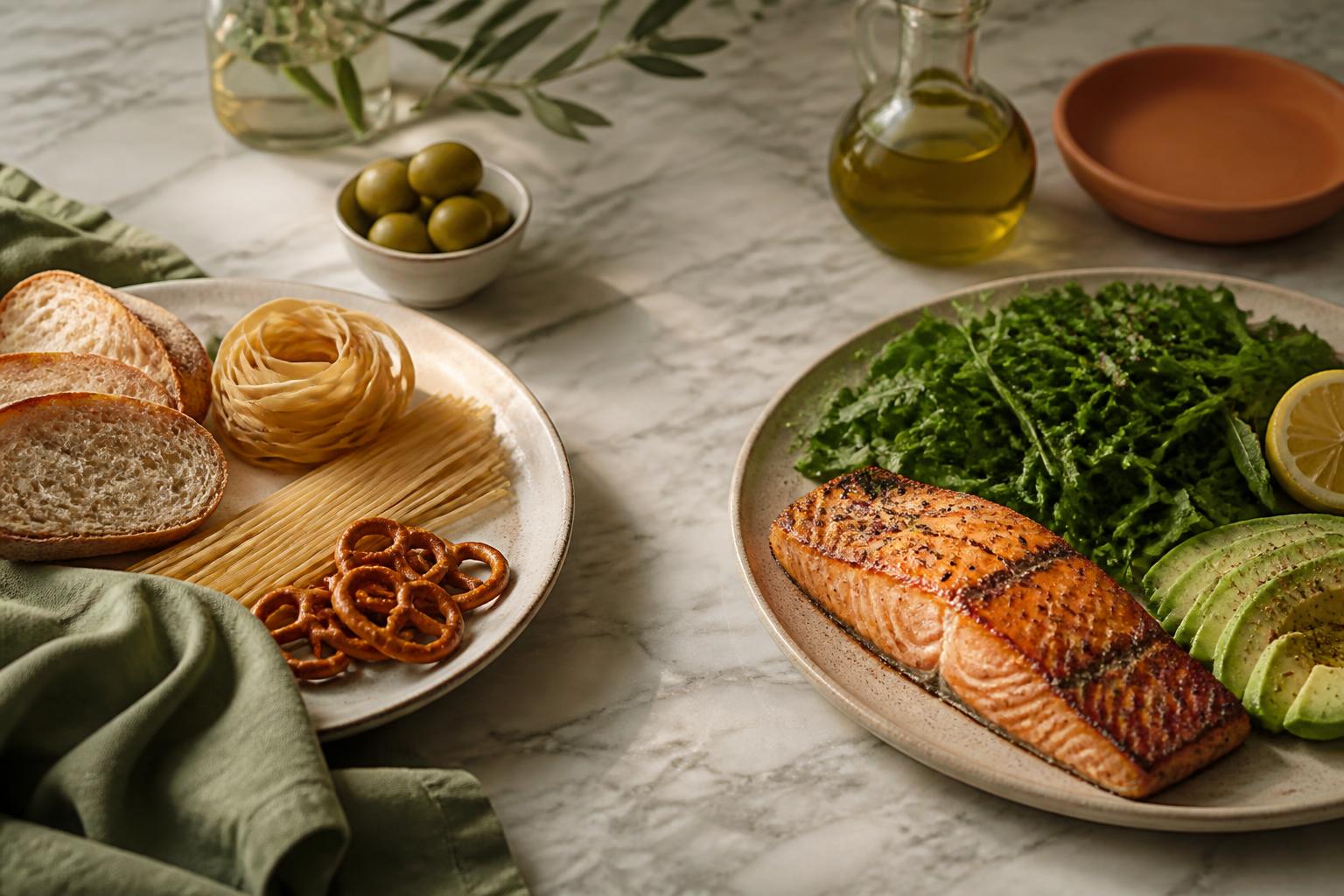
That's why the real question is what metabolic work a meal demands. Five hundred calories of bread, pasta, and dessert is not the same as five hundred calories of chicken, olive oil, and vegetables just because an app assigns them equal numbers. The question that matters is what the food does to blood glucose.
Eat all day
Breakfast at eight. Something at ten-thirty. Lunch at one. A snack at three. A bite at five because dinner's late. Dinner at seven-thirty. Dessert at nine. Maybe something before bed. No single occasion is huge, which makes the pattern easy to excuse — "I'm just eating a little."
What disappears is the line between eating and not eating. Whenever you eat — even protein or fat, which triggers a smaller insulin response — insulin gets released, and stays elevated for roughly two hours. String enough small meals together and you get an almost continuous bath of insulin.
Exercise once a day, then sit for the rest of it
Forty-five minutes of exercise is valuable, but it doesn't undo fifteen hours of stillness. The body needs movement throughout the day — walking, fidgeting, carrying things, muscles contracting and releasing. That scattered movement keeps cells burning energy and hungry for more, which lowers how much insulin they need to respond. Hungry cells respond to small amounts of insulin and clear glucose from the blood efficiently. Walk, take the stairs, carry things, stand up often — the more movement spread through your day, the further you get from diabetes.
So what would I actually do?
Learn what a carbohydrate is, and cut carbs across the board. Build meals around protein, high-volume low-carb vegetables, fat, and — if you eat them — dairy and eggs.
Think of your day as having one carbohydrate bucket. The only foods that don't count toward it are the freebies: leafy greens, string beans, beets, carrots, broccoli, cabbage, cauliflower, mushrooms, onions, herbs, scallions, eggplant, squash, tomatoes, peppers, Brussels sprouts, cucumbers. Everything else — pasta, oatmeal, crackers, bread, rice, cake, croissants, and the like — goes in the bucket.
Watch out for "healthier" substitutions that leave the underlying metabolic problem untouched. A whole-grain cracker is still a cracker. Brown rice is still rice. A gluten-free muffin is still a muffin. Organic sugar is still sugar. A smaller bialy is still bread. The question isn't whether marketing upgraded the adjective — it's whether the change actually addresses the sugar-insulin problem.
Cut to three meals a day, one snack if you need it. That gives your body real windows with no insulin activity at all.
Questions worth asking yourself
Do you start most mornings with starch? Eat again two hours later? Drink carbohydrates without counting them as food? Does lunch bring another big carb load? Do you snack in the afternoon? Does dinner open with bread, run through starch, and close with dessert? Do you move afterward? How many hours did your muscles actually work today? How often do you strength train? How much of your life happens sitting down? Is your abdominal weight creeping up year after year? Are your fasting glucose and A1C climbing while you keep eating the same way, simply because no one has technically diagnosed you yet?