Nutrition Food
A Complete List of Anti Inflammatory Foods for Morristown, NJ
April 11, 2026 · Julia Erickson
If you search for a list of anti inflammatory foods, you will find hundreds of food roundups that read like grocery receipts. Blueberries. Salmon. Turmeric. Broccoli. What most of them skip is the explanation that actually makes the list useful: why these foods work and how they fight inflammation through distinct biological pathways.
That explanation is what I want to give Morristown-area clients in this post. Understanding the mechanism behind the food helps you make smarter substitutions, stack multiple categories in a single meal, and build a real dietary pattern rather than just chasing a trending superfood each season.

Chronic inflammation isn't just a buzzword. It is a slow biological process that underlies joint pain, fatigue, gut dysfunction, skin flares, and a growing list of metabolic conditions. The foods below don't suppress that process artificially. They give your body the raw materials to regulate it on its own terms.
How This Anti-Inflammatory Foods List Is Organized
A standard list tells you what to eat. A mechanism-based list tells you what the food is actually doing once it reaches your cells.
Each category below represents a distinct anti-inflammatory pathway:
- Polyphenols intercept oxidative stress at the cellular level
- Omega-3 fatty acids shift the balance of pro- and anti-inflammatory signaling molecules
- Sulfur-containing compounds interrupt inflammatory enzyme cascades
- Carotenoids quench free radicals in fat-soluble environments
- Leafy greens supply the cofactors your body needs to complete anti-inflammatory reactions
- Herbs and spices carry concentrated bioactive compounds that act on specific inflammatory targets
- Fermented foods reduce systemic inflammation by improving gut barrier function
- Whole grains and fiber feed the microbiome and lower circulating inflammatory markers
When you understand this, you stop treating the list like a shopping checklist and start treating it like a toolkit.
Polyphenols
Polyphenols are plant-derived compounds that neutralize free radicals and block the activation of inflammatory signaling pathways, particularly the NF-kB pathway that drives many chronic inflammatory responses.
The richest polyphenol sources include:
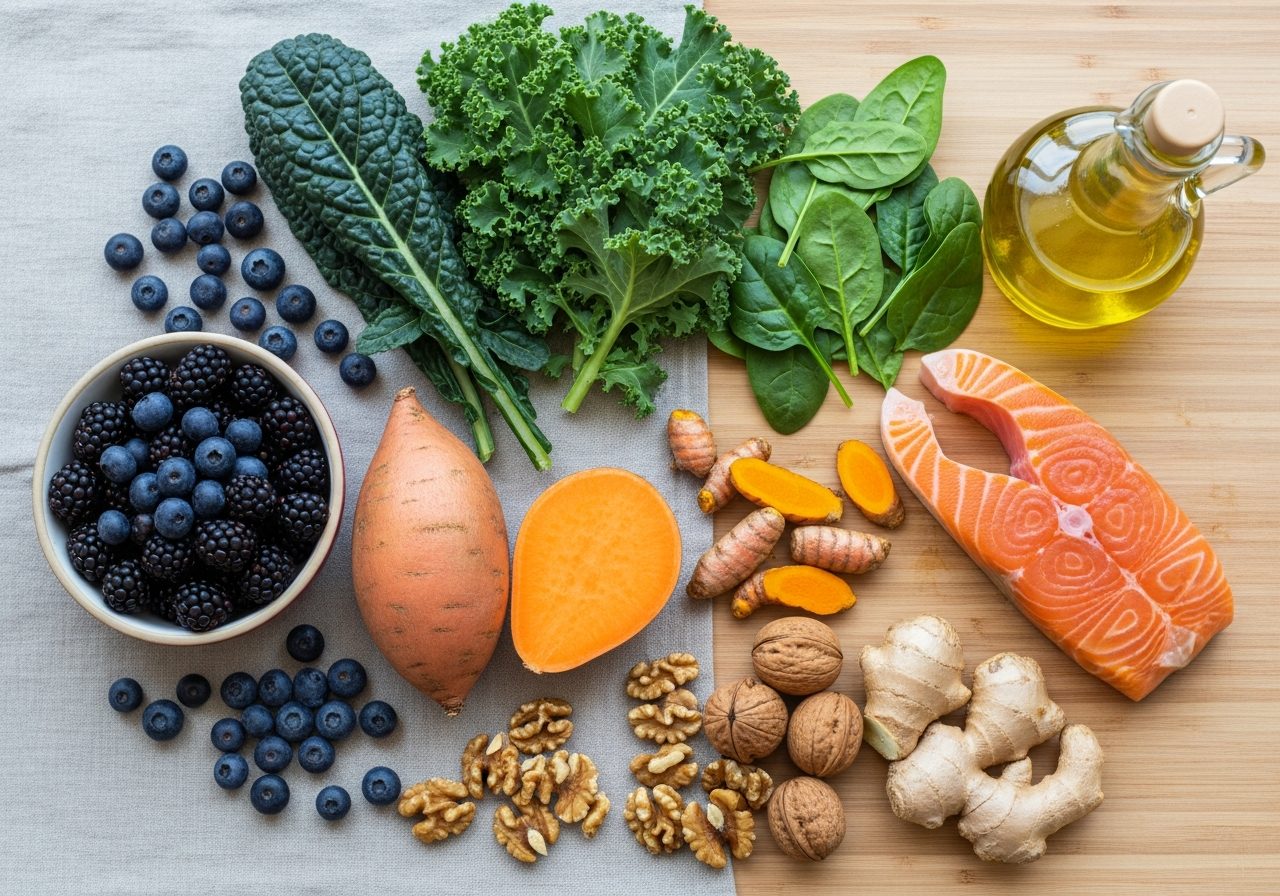
- Deeply colored berries: blueberries, blackberries, tart cherries, pomegranate seeds
- Dark chocolate and cacao: the flavanols in raw cacao and 70-plus percent dark chocolate reduce oxidative stress markers
- Green and white tea: epigallocatechin gallate (EGCG) is one of the most studied anti-inflammatory polyphenols
- Extra-virgin olive oil: oleocanthal, the compound responsible for that peppery throat sensation, acts on the same enzymes as ibuprofen
- Red onions, purple cabbage, and grapes: anthocyanins give these foods their color and their anti-inflammatory activity
Polyphenols work best from whole food sources. The polyphenol matrix in a cup of blueberries behaves very differently from an isolated supplement. Plant chemicals interact with each other, and that synergy is part of what makes whole food eating so much more effective than supplementation.
Omega-3 Fatty Acids
Omega-3 fatty acids are essential fats the body cannot synthesize on its own. They serve as precursors to resolvins and protectins, the compounds the body uses to actively resolve inflammation once it has done its job. Without adequate omega-3 intake, inflammation can linger long past its useful window.
The most bioavailable forms come from marine sources:
- Wild salmon, mackerel, sardines, and herring: highest in EPA and DHA, the long-chain marine omega-3s that your body can use directly
- Anchovies and mussels: excellent small-fish options with minimal mercury concerns
Plant sources provide ALA, a precursor that the body converts to EPA and DHA at limited efficiency:
- Flaxseeds and flaxseed oil
- Chia seeds
- Walnuts
- Hemp seeds
Beyond resolving inflammation, these essential fats lower blood pressure and heart rate, improve blood vessel function, and at higher doses ease the inflammation that plays a role in atherosclerosis. The full scope of benefits documented in the omega-3 fatty acids research makes a strong case for prioritizing marine sources consistently.
For clients who prioritize good fats in their eating pattern, fatty fish two to three times per week plus daily plant-based ALA sources covers most of what the body needs. The combination of fiber, antioxidants, and omega-3 fatty acids working together is more protective than any single nutrient alone.
Sulfur-Containing Compounds
Sulfur compounds are a category that most anti-inflammatory food lists overlook entirely, which is a significant gap.
Allium vegetables and cruciferous plants both contain sulfur-based compounds that inhibit cyclooxygenase enzymes (the same enzymes that NSAID pain relievers target) and block inflammatory cytokine production.
Alliums (garlic, onions, leeks, shallots, chives):
- Garlic produces allicin when crushed or chopped, which converts to a range of organosulfur compounds with measurable anti-inflammatory effects
- Raw or lightly cooked is more active than heavily processed
- Onions and shallots also contain quercetin, placing them in both the sulfur and polyphenol categories
Cruciferous vegetables (broccoli, cauliflower, Brussels sprouts, kale, bok choy, cabbage, arugula):
- Contain glucosinolates that break down into sulforaphane and indoles upon chewing
- Sulforaphane activates the Nrf2 pathway, which upregulates the body's own antioxidant defenses
- Broccoli sprouts contain ten to one hundred times more sulforaphane than mature broccoli
A practical note: lightly steaming cruciferous vegetables retains more sulforaphane than boiling. Raw or very lightly cooked is better for the anti-inflammatory compounds specifically.
Antioxidant Carotenoids
Carotenoids are fat-soluble pigments that give orange, red, and yellow produce their color. In the body, they accumulate in fatty tissues and cell membranes, where they intercept fat-soluble free radicals that water-soluble antioxidants cannot reach. This matters because free radicals damage DNA, proteins, and cell membranes when left unchecked. The protective role of antioxidants neutralizing free radicals in the body is one of the core mechanisms behind why plant-dense diets correlate with lower chronic disease risk.
Key carotenoid-rich foods:
- Carrots and sweet potatoes: beta-carotene, which converts to vitamin A and acts as a potent antioxidant
- Red, orange, and yellow bell peppers: contain beta-carotene, beta-cryptoxanthin, and vitamin C
- Tomatoes and tomato paste: lycopene, which is more bioavailable from cooked tomato than raw
- Butternut squash and pumpkin: concentrated beta-carotene per serving
- Mango and papaya: tropical carotenoid sources that also deliver vitamin C and bromelain
Pairing carotenoid-rich foods with a fat source (olive oil, avocado, nuts) significantly increases absorption because carotenoids are fat-soluble. A roasted sweet potato with a drizzle of olive oil is a better anti-inflammatory choice than a plain steamed one.
The practice of eating the rainbow is the simplest shorthand for this concept: a plate that contains deep purple, dark green, bright orange, and red produce is almost certainly delivering a broad spectrum of carotenoids and polyphenols together.
Leafy Greens
Eating leafy greens daily is a cornerstone of the Jolie Method, and the anti-inflammatory mechanism is specific.
Dark leafy greens (spinach, kale, Swiss chard, collard greens, arugula, watercress) supply:
- Folate: required for methylation pathways that regulate homocysteine, an inflammatory amino acid when elevated
- Magnesium: a cofactor in hundreds of enzymatic reactions including those that produce anti-inflammatory prostaglandins
- Vitamin K: regulates osteocalcin and plays a role in suppressing inflammatory cytokines
- Vitamin C: regenerates vitamin E in cell membranes, extending the antioxidant cycle
- Chlorophyll: some research suggests chlorophyll and its derivatives may reduce inflammatory markers, though human evidence is still building
From a practical standpoint, leafy greens are one of the most nutrient-dense foods per calorie available. Two cups of raw spinach delivers meaningful amounts of folate, magnesium, and vitamin K for very few calories, which makes it easy to incorporate at every meal without displacing other foods.
Arugula deserves special mention as both a leafy green and a mild cruciferous vegetable. It delivers glucosinolates alongside its folate and vitamin K content.
Herbs and Spices with Active Compounds
Anti-inflammatory herbs and spices are not decorative. They carry concentrated bioactive molecules that act on specific inflammatory targets. The key ones and what they do:
Turmeric (curcumin):
- Curcumin inhibits NF-kB directly, reducing the transcription of pro-inflammatory genes
- Bioavailability is low from turmeric powder alone; combining with black pepper (piperine) increases absorption significantly
- Best used in warm dishes with fat and black pepper to maximize delivery
Ginger (gingerol, shogaol):
- Inhibits the same cyclooxygenase enzymes targeted by NSAIDs
- Fresh ginger is higher in gingerol; dried ginger converts to shogaol, which has different but also anti-inflammatory properties
Rosemary (carnosol, rosmarinic acid):
- Carnosol inhibits NF-kB and shows measurable antioxidant activity in vitro and in some human studies
Cinnamon (cinnamaldehyde):
- Reduces inflammatory markers including CRP (C-reactive protein) in controlled studies
- True Ceylon cinnamon is preferred over Cassia for regular use due to lower coumarin content
Cloves (eugenol):
- One of the highest ORAC-rated spices measured; eugenol acts as both an antioxidant and a COX inhibitor
For a broader look at how herbs and spices for digestion connect to gut health and systemic inflammation, that post covers the intersection in more depth.
Fermented Foods
The gut-inflammation connection is now well established: a disrupted gut microbiome (dysbiosis) increases intestinal permeability, allowing bacterial fragments called lipopolysaccharides (LPS) to enter circulation and trigger systemic inflammation.
Fermented foods support the gut barrier and feed the bacterial species that produce short-chain fatty acids (butyrate, propionate, acetate). Short-chain fatty acids are the primary energy source for colonocytes and directly suppress inflammatory signaling in the intestinal lining.
Key fermented foods:
- Yogurt and kefir: live cultures of Lactobacillus and Bifidobacterium strains
- Kimchi and sauerkraut: fermented vegetables with additional prebiotic fiber
- Miso and tempeh: fermented soy with reduced phytate content and improved mineral absorption
- Kombucha: modest probiotic content with some polyphenols from the tea base
- Apple cider vinegar (unpasteurized): trace probiotic content, primarily useful for its acetic acid effects
For a full breakdown of this mechanism and which fermented foods to prioritize, the post on fermented foods for gut health covers the research in much more depth.
Whole Grains and Fiber
Whole grains that retain the bran and germ are rich in beta-glucan, a soluble fiber that has one of the most consistent anti-inflammatory profiles in the human diet. Beta-glucan:
- Feeds Bifidobacterium and Lactobacillus species in the colon
- Leads to increased butyrate production, which reduces inflammatory signaling
- Lowers LDL cholesterol (a secondary inflammatory driver when oxidized)
Oats and barley are the richest dietary sources of beta-glucan. Whole grain rye, wheat berries, and farro also contribute, though at lower concentrations.
The broader category of dietary fiber from all plant sources (legumes, vegetables, fruits, whole grains) reduces circulating levels of CRP and interleukin-6, two of the most commonly measured inflammatory biomarkers. Higher fiber intake is one of the most reproducible dietary interventions for lowering systemic inflammation.
What to Reduce
The anti-inflammatory list is only half the picture. These foods actively promote inflammation and counteract the benefits of the foods above:
- Refined sugar and high-fructose corn syrup: drive advanced glycation end products (AGEs) and elevate inflammatory cytokines
- Ultra-processed seed oils (refined soybean, corn, cottonseed, sunflower oil): high in omega-6 linoleic acid, which can push the omega-6/omega-3 ratio toward a pro-inflammatory state when consumed in excess
- Deep-fried foods: combine oxidized fats with high AGE formation
- Refined grains (white bread, white pasta, most commercial cereals): stripped of fiber and nutrients, spike blood glucose rapidly
- Excess alcohol: disrupts gut barrier function and increases LPS translocation
Reducing these foods matters as much as adding anti-inflammatory ones. You cannot out-eat a diet that is chronically pro-inflammatory.
How to Stack This Into Practice
The goal is not to eat one anti-inflammatory food per meal. It is to stack multiple categories at once so that you are addressing inflammation through several pathways simultaneously.
A practical framework:
- Aim to hit three or four mechanism categories at every main meal
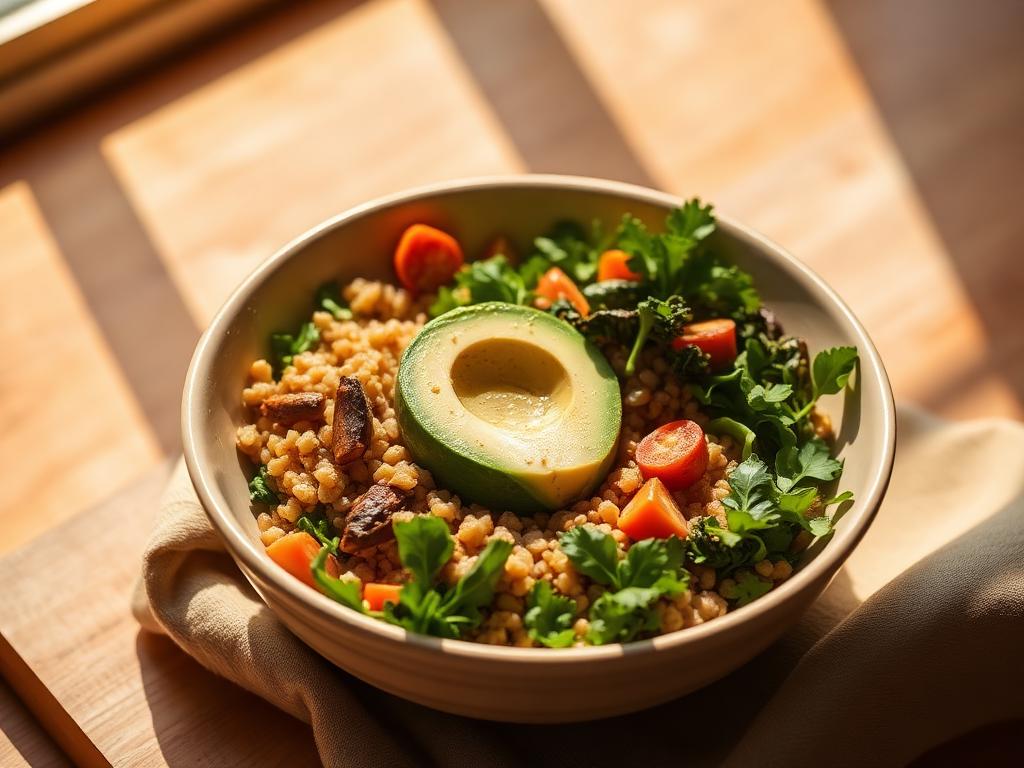
- Build your plate around a leafy green or cruciferous base, add a carotenoid (roasted orange vegetables), include an omega-3 or healthy fat source (salmon, olive oil, walnuts), and season generously with herbs and spices
- Polyphenols are easiest to add through berries at breakfast or olive oil used throughout the day
- Fermented foods and fiber-rich foods work best as consistent daily additions rather than occasional inclusions
The cumulative effect of hitting multiple categories consistently is greater than any individual superfood. This is what the research supports and what I see in practice with clients throughout Morristown and Northern New Jersey.
If you want a kitchen-organized stocking guide, my Jersey City companion post organizes the same foods by where to store them.
And if you are ready to move from reading to building a plan specific to your body and goals, Begin Here and let's build one together.
Looking for personalized, science-based support in Morristown? Explore Jolie's wellness programs in Morristown.