Beauty & Wellbeing
How to Feed Your Skin for Beauty, Healing, and Protection
August 5, 2026 · Julia Erickson
There is a reason skincare is always assessed by how deeply it penetrates — because what makes the difference in whether your skin is dull, breaking out, tired, blotchy, more or less lined, is what is happening in the deepest layer of the epidermis.
The availability of raw materials directly influences the pace of skin renewal, making them increasingly essential as this cycle naturally slows with age.
The Cycle Nobody Sees
Slowdown is the whole story of visible skin aging in miniature. A slower cycle means dead cells linger longer at the surface, giving skin a duller, rougher, less reflective quality. It means a small wound takes longer to close. It means whatever damage accumulated in a cell during its lifetime — oxidative stress, glycation, UV exposure — has more time to matter before that cell is replaced. In a nutshell, feeding your skin helps you look younger, heal better, and avoid a pro-cancerous skin environment.
Underneath this visible relay of dividing and shedding cells runs a second, quieter process most people have never heard of: autophagy, literally 'self-eating.' It's the mechanism by which a cell identifies its own damaged proteins and worn-out organelles, bundles them up, and breaks them down for recycling. Think of it as the housekeeping that happens between shifts. Research on skin aging consistently finds that when autophagy declines — and it does decline with age and chronic stress — damaged material accumulates inside keratinocytes and fibroblasts faster than it can be cleared. The result is measurable: more oxidative damage sitting in cells, earlier cellular senescence, a weaker barrier, and a dermis that produces new collagen more sluggishly because the fibroblasts responsible for it are themselves running down. Renewal, in other words, isn't just about making new cells. It's equally about clearing out the old material efficiently enough that the new cells aren't built on a foundation of debris. Stimulating autophagy is the basis of the Deep Reset.
The skin is not a separate system quietly doing its own thing; it is downstream of digestion, of circulation, of inflammation, of whatever is happening in the gut. Which is where diet stops being a cosmetic afterthought and starts being one of the actual inputs to the machine.
Inflammation Is the Brake Pedal
Every one of the processes described above — cell division, differentiation, autophagy, collagen synthesis — runs best in a low-inflammation environment and runs poorly in a high-inflammation one.
Chronic, low-grade inflammation doesn't announce itself the way an infection does; it just quietly redirects cellular resources toward defense and away from renewal, and it does so partly through diet.
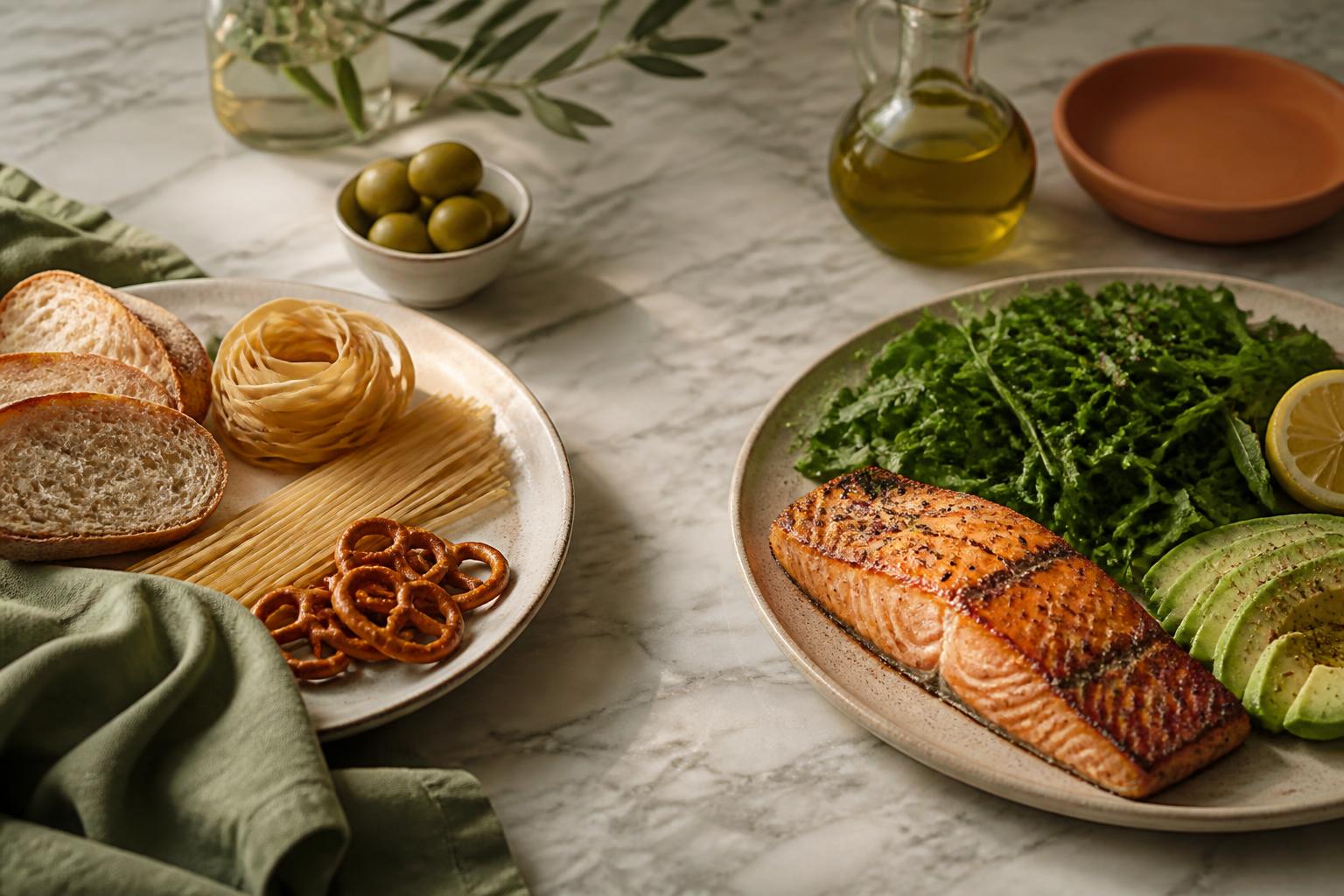
The clearest lever here is dietary fat balance. Skin cannot manufacture certain long-chain fatty acids on its own, because keratinocytes lack the enzymes needed to build them from scratch, which makes omega-3 and omega-6 fats what researchers call essential nutrients for skin.
The two families push cellular chemistry in different directions. Arachidonic acid, an omega-6 derivative, is converted into prostaglandin E2, a strongly pro-inflammatory signaling molecule. EPA, an omega-3 found in fatty fish and algae, competes for the same enzymatic pathway and produces a far less inflammatory eicosanoid instead. Shift the ratio of omega-3 to omega-6 in the diet, and you shift which of these signals dominates in skin tissue. Omega-6 isn't the enemy here; linoleic acid is itself essential for the lipid structure of the outer skin barrier and its loss causes water loss and dermatitis. The goal isn't eliminating one fat family — it's making sure omega-3 is present in enough quantity to keep the inflammatory signaling in check.
The Gut Is Upstream of the Skin
The second major lever is fiber, and its route to the skin runs entirely through the gut. When you eat plant fiber, your job isn't actually to digest most of it; that job belongs to trillions of bacteria in your colon, which ferment it into short-chain fatty acids — chiefly acetate, propionate, and butyrate. Butyrate in particular does double duty. Locally, it reinforces the tight junction proteins that hold intestinal cells together, tightening a gut lining that, when loose, allows inflammatory triggers to leak into circulation. Systemically, it promotes regulatory T cells and suppresses the Th17 inflammatory pathway, damping down the same whole-body inflammatory tone that shows up in skin as sluggish renewal, breakouts, or a compromised barrier. This is the gut-skin axis, and it's a two-way, not a one-way, relationship: what you feed your gut bacteria changes the signaling molecules circulating through your entire body, skin included. Fiber intake, then, isn't just a digestive habit. It's an upstream input into how much inflammatory pressure your skin cells have to work against every single day.
Building Material: Protein and Plant Antioxidants
If fiber and omega-3s control the inflammatory climate, protein supplies the literal construction material. Collagen, the structural protein that gives the dermis its firmness, and keratin, the structural protein that makes up the bulk of the epidermis itself, are both built from amino acids that have to come from the diet. Adequate protein intake supplies the raw amino acids for that ongoing synthesis and supports the cell turnover and repair response after everyday stressors like sun exposure. This doesn't require exotic sources: eggs, fish, poultry, tofu, tempeh, lentils, and chickpeas all supply the relevant amino acids, and a diet weighted toward whole plant and lean animal protein rather than processed sources tends to support this better simply because it arrives without the inflammatory baggage of ultra-processed food.
A high-plant-food diet contributes something else that doesn't show up on a nutrition label as cleanly: a dense supply of polyphenols and antioxidant compounds that help offset the oxidative stress skin cells accumulate from ordinary metabolism, UV exposure, and pollution. Since oxidative damage is one of the main things autophagy is tasked with clearing, and since fibroblast function declines when oxidative burden outpaces cleanup, a diet rich and varied in plant foods is doing quiet work at exactly the pressure point where renewal slows down with age.
Why This Adds Up to More Than the Sum of Its Parts
It's tempting to treat each of these — fiber, omega-3, protein, plant antioxidants — as separate line items, each with its own isolated benefit. But biology argues against treating them separately. They converge on the same handful of processes: how much inflammatory signaling skin cells have to contend with, how efficiently damaged material gets cleared out through autophagy, and whether there's enough raw material on hand to rebuild collagen and keratin as fast as the old material is shed. An anti-inflammatory, high-fiber, omega-3-rich, plant-forward, adequately-protein diet is a skincare routine you eat instead of apply. It dramatically influences the operating conditions your skin is running under. The renewal is not optional. What's optional is whether you give your body what it needs to keep pace with everything working against it.
The only real choice is whether to work with it or against it.