Detox Cleansing
The Liver Cleanse Detox Diet Plan to Know in Summit, NJ
June 4, 2026 · Julia Erickson
The Liver Cleanse Detox Diet Plan You Should Know About in Summit, NJ
The term "liver cleanse" circulates constantly in wellness circles, and it carries a lot of baggage. It suggests a special pill, an olive oil protocol, or a juice fast that somehow resets everything in three days. None of that is what a liver cleanse detox diet plan actually involves.
The liver does not collect stored toxins that need to be purged. It is already detoxifying around the clock, processing everything you eat, breathe, and absorb. What the liver needs is not a purge. It needs the right raw materials to complete that work, and adequate rest from the substances that burden it.
That is a meaningful distinction for Jolie's clients in Summit, NJ, and across Northern NJ who are looking at this from a place of genuine curiosity rather than trend-chasing. Understanding how your liver actually works changes what you do to support it.
How the Liver Actually Detoxifies
The liver runs a two-phase biochemical process to neutralize and eliminate compounds that would otherwise accumulate and cause harm.
Phase I relies on a family of enzymes called cytochrome P450 (CYP450). These enzymes use oxidation, reduction, and hydrolysis to chemically modify fat-soluble toxins, converting them into intermediate forms. The problem: Phase I intermediates are often more reactive than the original compound. They need to move quickly into Phase II or they can cause oxidative stress.
Phase II handles the handoff. It conjugates (attaches a water-soluble molecule to) the Phase I intermediate, making it stable enough to excrete via bile or urine. The main Phase II pathways are glucuronidation, sulfation, methylation, and glutathione conjugation.
Each pathway depends on specific amino acids and micronutrients. Without adequate cysteine, glycine, taurine, and glutathione precursors, Phase II slows and intermediates back up.
This two-phase model is why a liver cleanse detox diet plan is not about restriction alone. You also need to be adding the right inputs.
What Overburdens the Liver
Before discussing what to add, it helps to understand what creates unnecessary work. The liver processes everything that enters the bloodstream. When the incoming load is too high, Phase I backs up, intermediates accumulate, and inflammation follows.
Common contributors to liver burden include:
- Alcohol, which generates acetaldehyde during Phase I (a compound that is directly hepatotoxic when Phase II cannot keep up)
- Ultra-processed foods, refined sugar, and fructose in excess, which drive fat accumulation in liver cells
- Seed oils high in linoleic acid, consumed in large quantities consistently over time
- Environmental toxins: pesticide residues, synthetic fragrances, plastics, and mold
- Chronic stress, which elevates cortisol and impairs Phase I enzyme efficiency
- Medications and supplements that are heavily liver-metabolized, taken in excess or without clinical supervision
- Poor sleep, which reduces the overnight liver repair and glycogen cycling the organ depends on
None of these are reasons for alarm on their own. The liver is extraordinarily resilient. A meaningful support protocol addresses inputs from both directions: reducing burden while increasing nutritional supply.
The Liver Cleanse Detox Diet Plan: 7 to 14 Days
The protocol below is built around Phase I and Phase II biochemistry. It is not a fast, and it is not a juice-only regimen. It is a shift in the composition of what you eat for a concentrated window.
Phase 1: Remove
For the duration of the protocol, remove the following completely:
- Alcohol in any form
- Refined sugar and high-fructose corn syrup
- Ultra-processed packaged foods
- Seed oils (canola, soybean, sunflower, corn oil): replace with olive oil, avocado oil, or ghee
- Conventional dairy (most clients do better without it during the reset window)
- Gluten-containing grains (particularly wheat, barley, rye): removing these reduces intestinal permeability and lowers systemic inflammation during the reset
- Excess caffeine (one cup of organic coffee or green tea per day is acceptable, more than that places additional demand on the Phase I CYP1A2 enzyme)
Phase 2: Add Daily
The foods below either drive Phase II pathways directly or reduce the incoming burden on Phase I.
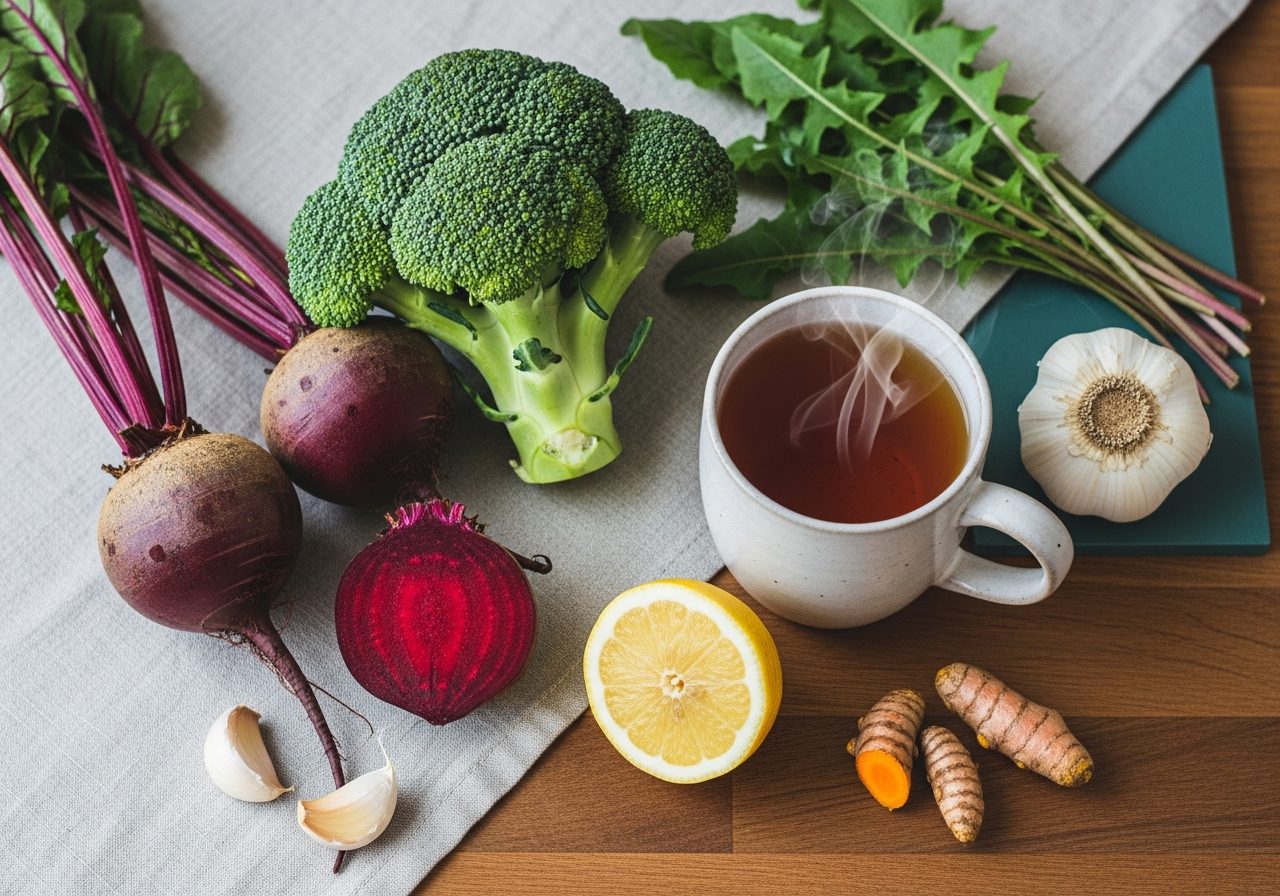
Cruciferous vegetables: broccoli, cauliflower, Brussels sprouts, cabbage, and kale. These contain glucosinolates, compounds that hydrolyze into isothiocyanates, molecules that modulate Phase II enzyme activity and support glutathione conjugation. Aim for two servings daily.
Bitter greens: dandelion greens, arugula, and watercress stimulate bile flow. Bile is how Phase II conjugates are excreted from the body. Sluggish bile flow is one of the underappreciated reasons people feel congested, bloated, and tired. Add them to salads or lightly sauté.
Garlic and onion: both contain organosulfur compounds that support the sulfation pathway in Phase II. Even one to two cloves of garlic per day makes a meaningful contribution.
Beets: contain betaine, which supports methylation (another Phase II pathway), and antioxidants that reduce oxidative stress generated by Phase I. Roast them, juice a small amount into a morning drink, or add sliced to salads.
Lemon water: warm lemon water in the morning provides a mild stimulus to bile production. The evidence for liver-specific benefit is modest, but it is a useful anchor for morning hydration and pairs well with the protocol.
Green tea: catechins, particularly EGCG, have been studied for their effects on liver enzyme activity and oxidative stress. One to two cups daily during the protocol is an appropriate amount.
Turmeric: curcumin has well-documented anti-inflammatory effects and modest support for Phase II liver detoxification. Add fresh or powdered turmeric to soups, sautés, and dressings. Combine with black pepper to increase absorption.
Quality Protein: The Phase II Building Block
Phase II conjugation is an amino acid-dependent process. The liver needs cysteine, glycine, and taurine in sufficient supply to produce glutathione and complete conjugation reactions. This means quality protein is not optional on a liver cleanse. It is required.
Good sources for the protocol:
- Pasture-raised eggs (rich in sulfur-containing amino acids including cysteine)
- Wild salmon or sardines (omega-3s reduce hepatic inflammation in addition to providing protein)
- Organic chicken or turkey
- Legumes: lentils, chickpeas, black beans (also contribute fiber for Phase II byproduct elimination)
Target 25 to 35 grams of protein per meal to keep Phase II running throughout the day.
Hydration and Fiber: Completing the Elimination Loop
Phase II produces water-soluble conjugates that exit the body through two routes: urine and bile into stool. Hydration and fiber support both.
Water: aim for half your body weight in ounces per day. For a 140-pound person, that is 70 ounces. This keeps the kidneys clearing Phase II byproducts efficiently.
Fiber: target a minimum of 30 grams per day during the protocol. Soluble fiber from oats, legumes, and flaxseed binds bile acids and Phase II conjugates in the gut, preventing their recirculation back into the liver (a process called enterohepatic recirculation). Without adequate fiber, conjugated compounds you just processed get reabsorbed and the liver has to process them again.
Herbal teas: dandelion root tea, burdock root tea, and milk thistle tea are traditional liver tonics with varying levels of evidence. Dandelion root supports bile flow. Milk thistle's active compound silymarin has been studied for hepatoprotective effects. The NCCIH notes that trial results have been mixed, so approach these teas as complementary support, not substitutes for the dietary work.
A Sample Day on the Protocol
This gives you a structure to work from. Adjust portions and specific foods based on what you have available.
Morning: warm water with lemon, then hydrate further before eating. Follow with 15 minutes of light movement: a walk, yoga, or stretching.
Breakfast: two to three pasture-raised eggs scrambled with sautéed greens (spinach, arugula, or kale), half an avocado, and a side of roasted beets or a small beet-ginger juice.
Mid-morning: one cup of green tea and a small handful of walnuts if hungry.
Lunch: a large salad with arugula or mixed greens as the base, raw or roasted cruciferous vegetables, a quality protein (wild salmon, grilled chicken, or hard-boiled eggs), and a lemon-olive oil dressing with garlic.
Afternoon: dandelion root or burdock tea. A snack of raw vegetables with hummus or a few Brazil nuts (a cofactor in glutathione synthesis).
Dinner: a lean protein (salmon, organic poultry, or lentils), a large serving of roasted cruciferous vegetables with olive oil and turmeric, and a modest portion of brown rice or black beans.
Evening: one cup of milk thistle or dandelion root tea. Lights out by 10 PM. The organ does significant regenerative work during sleep, and consistently cutting it short undermines the protocol.
What Not to Do
The internet contains versions of a "liver flush" protocol involving large quantities of olive oil mixed with citrus juice, sometimes with Epsom salts. These protocols have no clinical validation and carry specific risks.
Olive oil in large doses triggers gallbladder contractions. If gallstones are present (and many people do not know they have them), this can provoke a painful or dangerous blockage. Avoid them entirely.
The same skepticism applies to multi-day juice fasts framed as liver cleanses. Extended juice cleanse protocols often deplete the protein your liver needs for Phase II, making the biochemistry worse, not better.
Who Should Check With Their Doctor First
This protocol is a whole-food dietary shift, not a medical intervention. That said, a few situations call for a conversation with your physician before starting:
- Pregnancy or breastfeeding
- Any medication that is heavily liver-metabolized (statins, SSRIs, many antivirals, and others; your prescribing doctor will know)
- A personal history of disordered eating or restrictive eating patterns
- Known liver disease, gallstones, or any chronic illness affecting digestion or metabolism
When in doubt, send the protocol to your doctor and ask. The answer will almost always be yes, but it is worth confirming.
What to Expect
The goal of 7 to 14 days is meaningful biochemical shift, not transformation. Here is what clients typically report:
- Clearer, less congested skin by day five to seven, as the liver's Phase II capacity improves and fewer intermediates circulate
- More stable energy across the day, without the mid-afternoon drops that often follow high-sugar eating
- Reduced bloating, largely driven by the removal of processed foods and gluten, and the increase in bile flow from bitter greens
- Improved sleep quality, supported by reduced liver demand in the evening hours
- A shift in food preferences: after 7 to 14 days without sugar and ultra-processed foods, many clients find their appetite recalibrates toward whole foods
These are not dramatic claims. They are the predictable outcomes of reducing burden and supplying adequate Phase II inputs.
The Longer View
A liver cleanse detox diet plan works best as a seasonal reset, done once or twice a year with intention, rather than a panic response to feeling depleted. The real results come from the habits you carry forward, not from the period of restriction itself. A body reset diet protocol reinforces exactly that principle.
The liver-supportive foods in this protocol are not temporary remedies. Cruciferous vegetables, bitter greens, quality protein, fiber-rich legumes, and adequate hydration are the foundation of daily eating. Understanding why regular cruciferous vegetables belong in your rotation, not just during a cleanse, is what separates a one-time reset from durable liver health.
For Jolie's clients in Summit, the Whole Foods on Springfield Avenue carries everything in this protocol. Several of Summit's local natural-food shops also stock dandelion root and burdock teas, milk thistle supplements, and organic produce in season. The ingredients are not exotic. The protocol is genuinely doable.
If you want to explore a structured framework beyond the liver focus, the cleanse plan in Chatham covers the broader three-phase approach in detail.
The liver does not need a rescue. It needs the right inputs, consistently. Give it that, and it will do what it was designed to do.
Begin Here with a personalized Jolie Method protocol built around your specific health history and goals.
Looking for personalized, science-based support in Summit? Explore Jolie's wellness programs in Summit.