Detox Cleansing
Juice Cleanse and Detox: What Actually Works in Morristown, NJ
May 14, 2026 · Julia Erickson
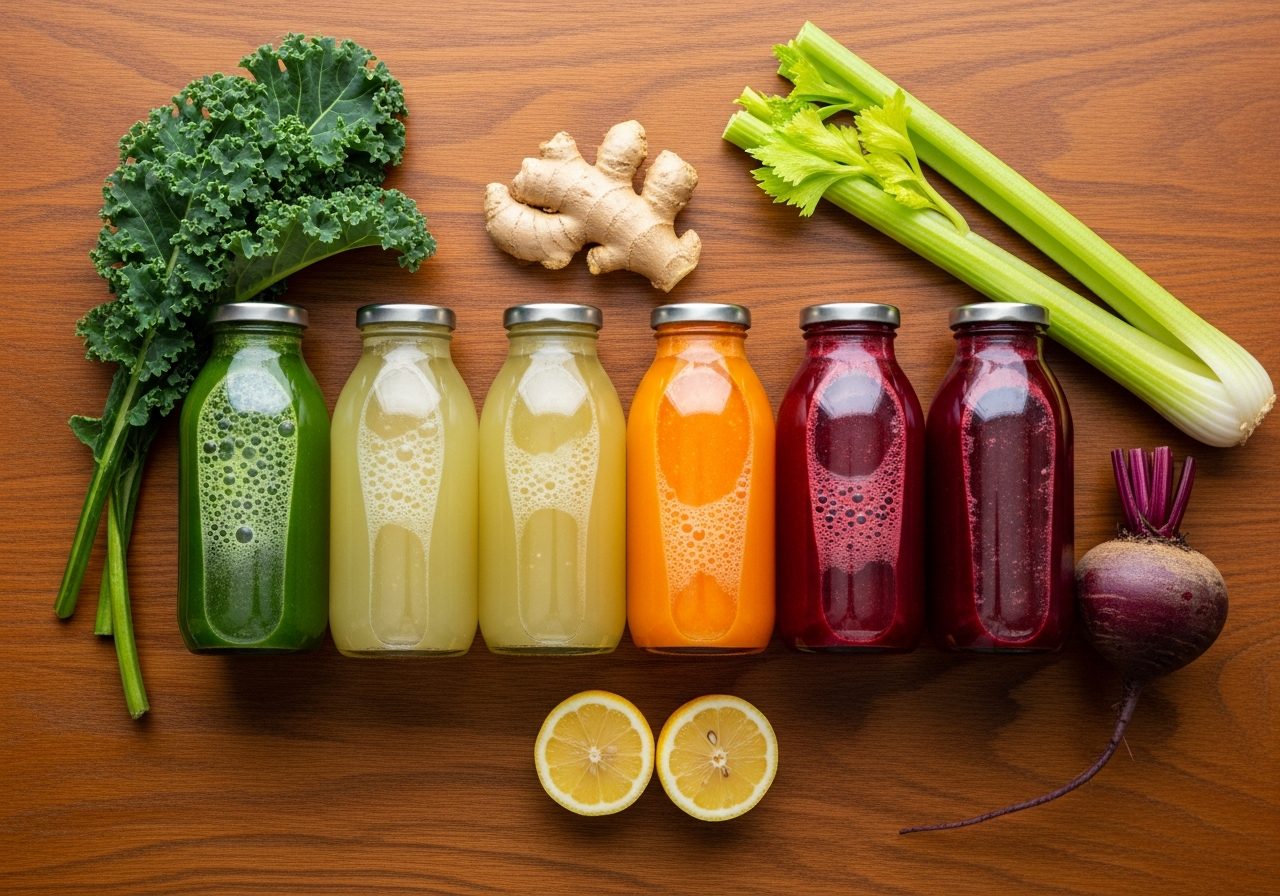
Every January, and again every spring, the word "detox" floods the wellness conversation. You see juice cleanses stacked at local shops, social media filling up with people clutching green bottles, and a general sense that a few days of liquid would flush the month's indulgences from your system. Jolie's clients in Morristown often ask about this, and the honest answer is more interesting than either a full endorsement or a flat dismissal of the detox diet juice cleanse space.
Your body already runs a sophisticated detox operation, around the clock, without your help. The question isn't whether you need to detox. It's whether a short juice protocol adds anything meaningful to what your body is already doing, and under what conditions it might.
What "Detox" Actually Means Physiologically
The word gets used so loosely in wellness marketing that it helps to start with what detoxification actually is.
Your liver is the centerpiece. It filters a substantial volume of blood every minute, processing nutrients, medications, hormones, and metabolic byproducts through two main phases. Phase I uses enzymes (primarily the cytochrome P450 family) to transform fat-soluble toxins into intermediate compounds. Phase II then conjugates those intermediates, attaching molecules like glutathione, sulfate, or glucuronide so they become water-soluble and can be excreted through bile or urine.
The liver isn't working alone. Your kidneys filter blood independently, your lungs expel volatile compounds with every exhale, and your gut wall acts as a physical barrier against reabsorption. Lymph moves immune cells and waste through tissue spaces.
This is a continuous, well-coordinated system. It doesn't accumulate a "backlog" of toxins that a juice cleanse unlocks. The liver's detoxification phases are enzymatic processes that run on nutrients (B vitamins, amino acids, sulfur compounds, antioxidants) and they run all the time.
So when a cleanse claims to "detox your liver," it's technically true only if the cleanse is providing those supporting nutrients and reducing the liver's workload. Which brings us to what cleanses can and can't actually do.
What a Detox Diet Juice Cleanse Can and Cannot Do
Let's be direct: there is no clinical evidence that commercially available juice cleanses remove specific toxins from the body that wouldn't have been removed anyway. The National Center for Complementary and Integrative Health has reviewed the research and found no compelling evidence that detox or cleanse diets eliminate toxins or produce lasting health benefits beyond what the body accomplishes on its own.
That isn't a reason to dismiss short juice protocols entirely. It's a reason to be honest about what they're actually doing.
A 1-3 day juice protocol can legitimately:
- Give the digestive system a shorter workload by removing solid food, reducing demand on digestive enzymes
- Flood the body with micronutrients from concentrated produce (magnesium, vitamin C, folate, potassium) that many people are chronically under-eating
- Interrupt habitual eating patterns, which can be a useful psychological reset
- Reduce processed food, alcohol, caffeine, and refined sugar intake for a defined window
What it cannot do: remove specific environmental toxins, create lasting metabolic change in 72 hours, or compensate for what happens in the six weeks after you finish.
The Risks Worth Knowing
Short cleanses carry real risks that are often glossed over in wellness marketing.
Blood sugar is the first concern. Many cold-pressed juices are high in natural sugars. A 16-oz green juice with apple and beet can deliver 30-40g of carbohydrates with almost no fat or protein to slow absorption. Without that buffering, blood sugar spikes quickly, then drops. That's why many people feel foggy, irritable, or lightheaded by day two of a juice-only cleanse. Understanding blood sugar stability before starting any cleanse protocol is genuinely useful preparation, not just caution.
Electrolyte imbalance follows extended fasting or heavily diuretic juice protocols. Potassium, sodium, and magnesium shift when food intake drops sharply, and this can produce headaches, muscle cramps, and fatigue. Those symptoms are often called "detox symptoms" when they're actually electrolyte fluctuation.
Calorie restriction is real. A typical 3-day cleanse runs 900-1,200 calories per day, below the threshold for most active adults. Weight loss in that window is almost entirely water and glycogen depletion. It returns within a few days of normal eating.
The rebound problem is perhaps the most overlooked risk. If a cleanse is followed by returning to the exact same eating patterns that preceded it, the body rebuilds its baseline quickly and the net benefit is close to zero. The cleanse becomes a permission structure, a way of "earning back" old habits rather than genuinely shifting them.
The Post-Cleanse Phase Matters More Than the Cleanse Itself
This is the piece I emphasize most with clients: what you eat in the five to seven days after a cleanse determines whether it was worth doing.
A juice protocol that flows into a week of anti-inflammatory whole foods, high in leafy greens, quality proteins, good fats, and fiber, creates a genuine dietary reset. The cleanse becomes a runway into better habits, not a standalone event. The gut microbiome needs prebiotic fiber and diverse plant matter to rebuild after a few days of predominantly liquid intake. The liver's Phase II detoxification pathways need sulfur-rich vegetables (broccoli, garlic, onion), amino acids, and antioxidants to function optimally.
This is the gap between a cleanse that works and one that doesn't: the follow-through.
What Actually Works: A Pragmatic Framework
If you're drawn to the idea of a seasonal reset, here's what the evidence actually supports.
Start with preparation, not the cleanse itself. In the three days before starting any juice protocol, reduce caffeine, alcohol, and processed sugar gradually. This prevents the shock withdrawal headache and makes the cleanse window more productive.
Keep the protocol short. One to three days is the supported window for any gut rest protocol. Beyond that, calorie restriction and muscle catabolism become real concerns. The value is in the pattern interrupt, not in duration.
Prioritize nutrients, not restriction. A cleanse that includes vegetable broths, nut milks, or a small amount of whole food alongside juices maintains calorie adequacy and reduces blood sugar volatility. Think of it as a nutrient-dense interval, not a starvation protocol. A 24-hour soup cleanse is actually a more forgiving entry point than a strict juice-only protocol for most people.
Build the rebuild phase intentionally. Returning to whole foods after a cleanse is not a reward. It's the main event. Cruciferous vegetables, beets, dark leafy greens, quality proteins, and fermented foods in the week following a cleanse support everything the cleanse was trying to accomplish.
For daily liver support outside of any cleanse period, the research-backed foods aren't surprising. Cruciferous vegetables (broccoli, cauliflower, Brussels sprouts) support Phase II detoxification. Bitter greens (dandelion, arugula, radicchio) stimulate bile production. Beets, garlic, onion, turmeric, and dark berries contribute to antioxidant pathways that protect liver cells.
Blood Sugar, the Gut, and Hormones: They're Connected
One conversation that comes up often with clients: the overlap between gut function, hormone balance, and detox. Processed food loads, alcohol, and high-sugar diets increase the gut's permeability and can contribute to systemic inflammation, which in turn affects how the liver processes hormones. This is why a well-designed gut reset can produce benefits that show up in energy, skin clarity, and hormonal balance. The gut-hormone connection is real, it's just not as simple as a bottle of green juice fixes it.
The why behind a detox matters here too. If your reason for cleansing is to feel less inflamed, sleep better, or reduce sugar cravings, a short protocol with strong follow-through can genuinely serve that goal. If your reason is rapid weight loss or a toxic flush, the science simply doesn't support that framing.
A Note for Morristown
Morristown's wellness landscape is sophisticated. There's no shortage of juice bar options, cold-press delivery services, and cleanse programs marketed to busy, high-achieving professionals who want a quick reset. Working just outside Morristown in New Vernon, I've spent years watching clients cycle through commercial cleanse programs that promise transformation and deliver temporary water weight loss.
The shift is a simple one: stop thinking of a cleanse as the event, and start thinking of it as a doorway. What you walk through into matters more than the door itself.
If you're considering a juice protocol this season, take 20 minutes first to think about the week after. That's where the actual work, and the actual results, happen.
Looking for personalized, science-based support in Morristown? Explore Jolie's wellness programs in Morristown.