Nutrition Food
Building a Food as Medicine Diet Plan in South Orange, NJ
April 16, 2026 · Julia Erickson

Building a Food as Medicine Diet Plan in South Orange, NJ
Most people who come to me already believe food can heal. They have read about it, heard it from a doctor, or felt it after a weekend of eating better and waking up lighter. What they are missing is not the conviction. It is the plan.
That gap between "food is medicine" and "here is what I am eating this week" is exactly where most people stall. This post is about closing that gap. If you are in South Orange or anywhere in Northern NJ and you want to build a food as medicine eating plan you will actually follow, this is where we start.
Why "Eat Healthy" Is Not a Plan
The problem with general healthy-eating advice is that it skips the most important part: your starting point. Your gut situation is not the same as your neighbor's hormone situation. Your work schedule, your family's dinner preferences, your budget, and what is available at the South Orange farmers market on a Friday morning all shape what a real, workable plan looks like for you.
A food as medicine diet plan is not a list of superfoods. It is a system built around you, your body, and your daily life. Here is the five-step framework I walk my clients through.
The 5-Step Framework for Building Your Food as Medicine Diet Plan
Step 1: Assess Your Starting Point
Before you change anything, take stock of where you are. This means more than noting that you "eat too much sugar." It means getting specific.
Write down your current eating pattern for three days, as honestly as you can. Note your top three physical complaints, whether that is afternoon fatigue, bloating after meals, poor sleep, joint stiffness, or low mood. Identify your lifestyle constraints: how many nights a week you cook, what your family will and will not eat, your realistic grocery budget, and your cooking skill level.
This assessment is not a judgment. It is a map. Without it, any plan you build is just guesswork layered onto the problem.
The functional nutrition approach treats symptoms as information. Your fatigue is telling you something. Your bloating is telling you something. The assessment phase is about learning to listen before you start prescribing.
Step 2: Identify 1 to 3 Priority Areas
Here is where most people go wrong. They try to fix everything at once. They give up gluten, dairy, sugar, alcohol, and processed food in the same week, then fall apart by day four.
Instead, pick one to three health priorities to target with food. Not everything. These might be gut symptoms, fatigue, hormonal irregularities, weight, mood, or joint pain. Choose what is most disruptive to your daily life and most likely to respond to dietary change.
When you feel better in one area, the motivation to keep going gets stronger. That is the strategy. Sequential wins build a sustainable plan. Trying to fix everything on day one rarely produces any wins at all.
Step 3: Design Your Daily Plate Framework
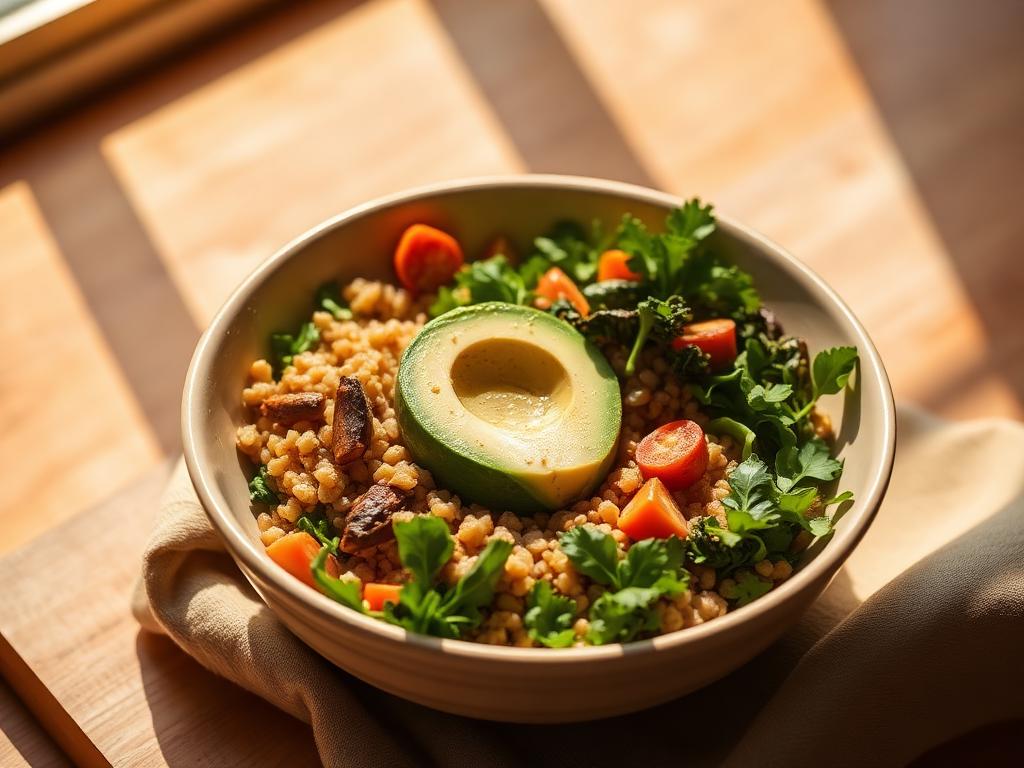
Once you know your priority areas, you can design a daily plate structure that targets them. The base framework looks like this: fill half your plate with vegetables and some fruit, a quarter with quality protein (animal or plant-based), a quarter with whole grains or legumes, and add a source of healthy fat and a small fermented element.
From there, you adjust based on your priority. If gut healing is the goal, tip the plate toward higher fiber and include a daily fermented food. If mood support is the focus, increase omega-3-rich protein (fatty fish, walnuts, flaxseed) and prioritize steady blood sugar through protein at every meal. If hormones are the issue, add more cruciferous vegetables and quality fats like avocado and olive oil.
This is eating your plants first taken one step further: not just including vegetables but choosing the right ones in the right amounts for what your body needs most right now.
The plant-based eating research consistently shows that diets built around whole plant foods reduce risk across multiple chronic conditions, including heart disease and type 2 diabetes. That does not mean you have to go fully plant-based. It means plant foods should form the structural foundation of your plate, regardless of whether you also include quality animal protein.
Step 4: Add 5 to 7 Therapeutic Foods Systematically
This is the part people find the most exciting and the easiest to overdo. You do not need 25 superfoods. You need five to seven therapeutic staples that rotate through your weekly grocery list reliably.
A reasonable starter set: turmeric used daily in cooking or as a tea, fatty fish twice a week (salmon, mackerel, sardines), fermented vegetables every day (kimchi, sauerkraut, or a high-quality plain yogurt if you tolerate dairy), leafy greens every day, and berries four or five times per week.
Pick the five that align with your priority area and that you will realistically eat. In South Orange, the Friday farmers market makes fresh seasonal produce genuinely accessible. Swapping in whatever is in season at peak ripeness is one of the simplest upgrades you can make to any plan.
Step 5: Remove Inflammatory and Disruptive Foods
The removal side of a food as medicine diet plan is just as important as the additions. The main categories to reduce are refined sugar, ultra-processed foods, industrial seed oils (canola, soybean, corn, sunflower in processed forms), and alcohol used habitually.
The World Health Organization recommends limiting free sugars to less than 10 percent of total daily energy intake, which works out to roughly 50 grams per day for most adults. For many people, that alone represents a dramatic reduction. Sugary drinks are the fastest place to start.
This is not about purity. It is about reducing the daily inflammation burden so the therapeutic foods you are adding can actually do their work. If you are eating salmon twice a week but drinking a sweetened coffee drink every morning and finishing the day with a glass of wine and a processed snack, the additions will not move the needle.
A Sample Weekly Plan Skeleton
This is not a rigid meal plan. It is a framework to give your week some structure without locking you into a recipe you do not have time to cook.
| Day | Breakfast | Lunch | Dinner |
|---|---|---|---|
| Mon | Eggs with leafy greens + berries | Large salad with legumes + olive oil | Baked salmon, roasted cruciferous vegetables, quinoa |
| Tue | Smoothie (greens, flax, berries, almond butter) | Leftover salmon over greens | Chicken with turmeric, sweet potato, fermented veggie side |
| Wed | Overnight oats with berries + walnuts | Veggie soup with chickpeas | Stir-fry with tofu or shrimp, leafy greens, brown rice |
| Thu | Yogurt (plain, full-fat) with berries, seeds | Big salad + hard-boiled eggs | Grass-fed beef stir-fry, roasted beets, fresh herbs |
| Fri | Eggs any style + sauteed greens | Leftovers or grain bowl | Farmers market haul: roasted seasonal vegetables, lentil soup |
The pattern matters more than the specific dishes. Protein at every meal. Vegetables at every meal. A fermented element once a day.
Whole grains or legumes as the starch. That is the structure, and the recipes can rotate endlessly around it.
Common Pitfalls
The most common way people derail a food as medicine diet plan has nothing to do with willpower. It is unrealistic design.
Trying to overhaul everything in one week produces a plan that is impossible to maintain. Ignoring social meals creates unnecessary stress and sets up an all-or-nothing mentality. Expecting dramatic results in the first two weeks when the body needs 30 to 90 days to shift inflammation and hormonal patterns leads to early abandonment.
The other major pitfall is treating the plan as a set of restrictions rather than a set of additions. You are not removing joy. You are replacing low-value foods with high-value ones, and most people find that within a few weeks, the cravings for the low-value foods diminish significantly.
Cost and Time
A food as medicine diet plan does not have to be expensive. Whole-food staples, including dried legumes, frozen vegetables, eggs, canned sardines, plain yogurt, and seasonal produce, are among the most affordable items in any grocery store.
Batch cooking once or twice a week changes the math entirely. Cook a large pot of beans or lentils on Sunday. Roast a sheet pan of mixed vegetables. Hard-boil a dozen eggs.
These become the building blocks for three to four meals without requiring daily cooking. In a town like South Orange, where the commute to Manhattan is built into many people's schedules, having ready-made components in the refrigerator is what keeps the plan from collapsing by Tuesday.
When to Bring in a Practitioner
A self-built plan gets most people a long way. But there are situations where working with someone trained in functional nutrition accelerates results significantly.
Consider it if you have been following the framework for 60 to 90 days and your primary complaints have not shifted. Consider it if you have an autoimmune condition, a hormonal diagnosis, or lab values that keep coming back off. Consider it if your gut symptoms are complex enough that food additions and removals are not producing a clear signal.
This is not a failure of the plan. It is a signal that the inputs from a practitioner, including labs, personalized therapeutic protocols, and more precise supplementation, are part of the picture. The framework you have built is still the foundation. A functional practitioner builds on top of it.
Build the Plan, Then Follow It
The healing foods already exist. The research already supports using food as the first line of intervention for most chronic complaints. What is missing for most people is the step between knowing that and living it.
Start with the assessment. Pick your one to three priority areas. Design the plate that serves them. Add the therapeutic foods that fit your life in South Orange and the surrounding area.
Pull back on the foods driving inflammation. Give it 90 days.
That is the food as medicine diet plan. Not a list of rules. A system you built for yourself, starting from where you actually are.
Looking for personalized, science-based support in South Orange? Explore Jolie's wellness programs in Northern New Jersey.