
Lifestyle Philosophy
7 Habits of Healthy Living to Start This Month in Montclair, NJ
April 9, 2026 · Julia Erickson
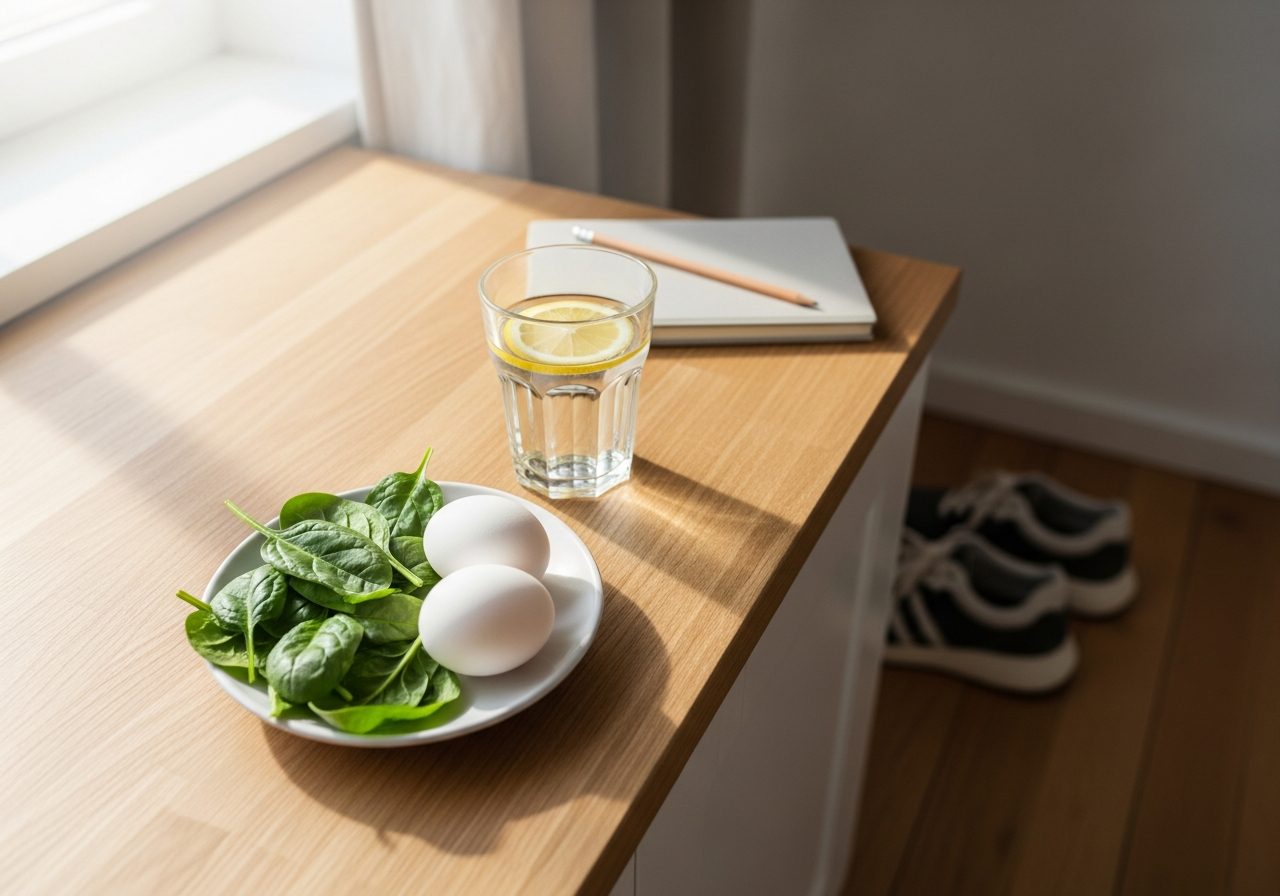
Most wellness advice tells you what you should eventually be doing. This post tells you what to do this month, starting this week, in a specific order.
If you live in Montclair and you're ready to move from "I know I should be doing better" to actually doing it, this is the plan. Seven habits of healthy living, rolled out over four weeks so nothing feels like too much at once. By the time week four is over, you'll have a complete foundation you can build on for years.
Why These Habits of Healthy Living, and Why This Order
The science behind behavior change is clear: trying to install too many habits at once collapses under its own weight. Each of these seven habits has been chosen because it delivers real physiological benefit on its own, and because it reinforces the habits around it. Water first thing makes protein at breakfast easier. Daily walks outside reinforce better sleep. Better sleep makes cooking at home feel like less of a chore.
The staggered rollout (two habits per week for three weeks, then one final habit in week four) is intentional. You're not playing catch-up. You're building.
Week 1: The Foundation Habits
Habit 1: Drink Water First Thing in the Morning
Before coffee, before your phone, before anything else: 12 to 16 ounces of water. This single habit addresses something most of us are perpetually behind on. After six to eight hours of sleep, your body is mildly dehydrated, and that dehydration hits your energy, your digestion, and your mood before you've even noticed it.
Morning hydration improves cognitive performance and supports the kidney function that helps your body clear waste built up overnight. It also takes 30 seconds. That's the real reason to start here: the habit cost is almost nothing, but the benefit is immediate and compounding.
Implementation: Keep a full glass or small carafe on your nightstand or kitchen counter, ready the night before. Remove the friction entirely. The barrier for most people isn't willpower. Coffee is simply closer.
Common barrier: "I just forget." Fix this by placing the water bottle in an unavoidable spot: in front of your coffee maker, or next to your toothbrush. The habit triggers itself once the cue is impossible to miss.
Habit 2: Eat Protein with Breakfast
This pairs naturally with Habit 1, so we install both in week one. A breakfast built around protein (eggs, Greek yogurt, smoked salmon, cottage cheese, a legume-forward dish) does three things: it stabilizes blood sugar from the first meal of the day, it reduces mid-morning hunger that leads to reactive snacking, and it supports muscle synthesis, which matters more as we age.
A common pattern I see with clients is the "light breakfast" (a smoothie, toast, or coffee only), followed by a 10 a.m. hunger crash and a poorly chosen snack. The light breakfast isn't gentle on your body; it just delays the demand. Protein at breakfast satisfies that demand early, on your terms.
Implementation: Aim for 25 to 35 grams of protein at breakfast. Two eggs plus Greek yogurt gets you there easily. Prep what you can the night before so morning is fast.
Common barrier: "I'm not hungry in the morning." Start small. Even 15 grams is better than none. Hunger often follows the habit, not the other way around.
Week 2: Movement and Color
Habit 3: Walk 20-Plus Minutes Daily, Ideally Outside in Daylight
The physical activity guidelines from the American College of Sports Medicine are unambiguous: all healthy adults benefit from moderate-intensity movement daily, and a brisk 20-minute walk qualifies. But walking outside in daylight adds something a treadmill cannot: light exposure that regulates your circadian rhythm, lowers cortisol, and lifts mood through serotonin pathways.
Montclair is unusually well-suited for this habit. Brookdale Park's walking paths wind through mature trees and give you a full outdoor circuit without leaving Essex County. Even the walkable downtown (a few blocks from Grove Street toward the Lackawanna Plaza) works on a lunch break. You don't need a gym membership or equipment. You need to put on shoes and go outside.
We covered the mood and metabolic effects of sunlight exposure in an earlier post, and the research on daylight and cortisol regulation is consistent and underappreciated. This is a habit that doubles as both movement and light therapy.
Implementation: Schedule it like a meeting. Same time each day if possible (morning works best for circadian consistency). 20 minutes minimum, but 30 to 45 is better when you have it.
Common barrier: "I don't have time." Walking replaces scrolling, not productivity. Most people reclaim the time from the phone, not from work.
Habit 4: Eat Five or More Colors of Plants Per Day
Phytonutrients are the compounds in plants that give them color, and they do very different things in your body. Red plants (tomatoes, beets, red bell peppers) contain lycopene and anthocyanins. Orange and yellow plants deliver beta-carotene. Green plants are your folate, magnesium, and chlorophyll source. Purple and blue plants have the highest antioxidant density. White and tan (onions, garlic, cauliflower) are rich in allicin and quercetin.
You don't need to memorize any of this. You just need to count five colors at the end of the day. It's the simplest nutritional tracking tool that actually works, because it points you toward diversity without requiring a food diary.
This connects to what we wrote about in Eat the Rainbow: the more color variation in your plate, the broader the coverage of micronutrients your body needs for everything from immune function to hormone balance.
Implementation: At dinner, do a quick visual check. Did you hit five colors today? If not, add something fast: a handful of blueberries, a side of steamed broccoli, a roasted beet. The goal is awareness, not perfection.
Common barrier: "Eating that many vegetables is expensive." Frozen produce counts. Frozen broccoli, frozen berries, and canned tomatoes are all phytonutrient-rich and budget-friendly.
Week 3: Sleep and the Kitchen
Habit 5: Create a Wind-Down Ritual That Ends with Phones Off
Good sleep hygiene is not just about what happens when you close your eyes. It's about the 30 to 60 minutes before that. The wind-down ritual matters because your nervous system needs a transition period between the high-stimulation day and the low-stimulation state required for real rest.
The research is clear that blue light from screens suppresses melatonin production, and that cognitive stimulation from phones (checking messages, reading news, scrolling social) keeps your brain in alert mode past the point where it can naturally downshift. The result isn't just difficulty falling asleep; it's fragmented, lighter sleep that doesn't deliver the same restoration.
Build a ritual that works for you: it might be a short journal entry, a decaf herbal tea, some light stretching, or simply reading a physical book in dim light. The ritual matters less than the consistency of it. And that connection between a specific routine and falling asleep is, as the Sleep Foundation notes, something the brain learns to reinforce over time.
Implementation: Set a phone-off alarm 45 minutes before your target bedtime. The alarm is a cue to begin winding down, not a deadline. Honor the 45-minute transition.
Common barrier: "I need my phone for the alarm." Buy a $12 alarm clock. Seriously.
Habit 6: Cook One More Meal at Home Per Week Than You Currently Do
This is the most sustainable dietary upgrade available because it doesn't require you to change what you eat. It just changes who makes it. Home-cooked meals are, on average, lower in sodium, lower in refined oil, higher in fiber, and a fraction of the calorie density of even "healthy" restaurant food.
The habit isn't "become a home chef." It's one more meal. If you currently cook dinner three nights a week, aim for four. If you're at two, go to three. A week-over-week increment is sustainable in a way that "I'm going to meal prep every Sunday" often isn't.
We write a lot about the relationship between whole food preparation and hormone balance, gut health, and metabolism. The common thread is always the same: the more you control what goes into the food, the more your body can do what it's designed to do. This is deeply aligned with everything in the healing foods approach: real ingredients, simply prepared, consistently eaten.
Implementation: Choose one meal category to expand into. Soups, grain bowls, and sheet-pan dinners are low-effort and highly repeatable. Batch-cook once on Sunday and it covers multiple meals.
Common barrier: "I don't know what to make." Keep a three-recipe rotation for weeknights. You don't need variety every week. You need reliability.
Week 4: Connection
Habit 7: Schedule One Social Connection Per Week
This one catches people off guard in a list of healthy habits. But the research on loneliness and chronic illness is among the strongest findings in modern epidemiology. Social isolation is as harmful to health as smoking 15 cigarettes a day. Real, present, face-to-face connection reduces cortisol, supports immune function, and is one of the most reliable predictors of longevity across cultures.
The word "schedule" is doing a lot of work here. Spontaneous social connection is lovely, but it's not a habit. A habit requires a predictable cue and a committed action. One connection per week, scheduled in advance, is manageable for even the busiest person.
In Montclair, this habit has some natural structure built in. The Montclair Farmers Market (running seasonally at Fullerton Avenue) is a genuine community gathering point. A walking date through Brookdale Park doubles as Habit 3. A standing dinner with a friend satisfies Habit 6 if you cook it together.
Implementation: Put it in your calendar on Sunday for the coming week. One person, one plan. The format doesn't matter.
Common barrier: "My friends are busy." You go first. Send the text. Schedule it anyway.
How to Stack the Seven Habits
James Clear's framework in Atomic Habits describes habit stacking: attaching a new habit to an existing routine so the existing routine becomes the cue. You're already doing that here. Habit 1 (water) stacks onto waking up. Habit 2 (protein) stacks onto breakfast. Habit 3 (walk) stacks onto a lunch break or morning routine. The week-by-week rollout is a pre-built stacking sequence.
The goal after four weeks isn't mastery. It's autopilot. These habits should feel low-effort by week eight because they've been threaded into the existing structure of your day.
When to Add Habit 8 and Beyond
After 60 to 90 days, when these seven habits feel genuinely automatic (not effortful, not aspirational: automatic), that's when you add the next layer. What that looks like depends on your specific health goals. Clients who want to go deeper with nutrition might layer in a 7-day body reset. Clients focused on sleep and stress might add a morning meditation or breathwork practice.
But none of that happens productively until the foundation is solid. These seven habits are the foundation.
A Note from Julia
What I love about this list is that none of it requires a dramatic life change. Montclair has beautiful parks, a walkable downtown, and a seasonal farmers market. You have everything you need to make habits 3 and 7 easy. The rest is just preparation and patience.
You don't have to do all seven today. You do have to start somewhere, and somewhere is week one, habit one: drink the water.
Jolie works with clients throughout Northern NJ who are building exactly this kind of foundation, one small, consistent step at a time. If you'd like support connecting these habits to your specific health goals, I'd be glad to help. Begin here.
If you're curious about how a more complete approach to everyday wellness looks across multiple dimensions of your life, the post on what a holistic wellness lifestyle actually looks like is a natural next read. And for a more philosophical take on the habits most people overlook, the habits no one talks about covers the quieter side of this same territory.
Looking for personalized, science-based support in Montclair? Explore Jolie's wellness programs in Northern New Jersey.